
Best Non Woven Geotextile Suppliers in China for Global Buyers
Choosing a Non Woven Geotextile supplier in China calls for more than comparing prices. These fabrics support filtration, drainage, separation, and soil protection across many projects. A road subgrade may need different strength and permeability from a drainage trench. Small specification differences matter.
Buyers should check fabric weight, tensile strength, puncture resistance, roll width, and material consistency. Ask for current product data and representative samples. Then compare test results against the project requirements, not just a sales brochure. A sample can look sound and still perform poorly under site conditions. That is easy to overlook.
A reliable supplier should explain its production controls, inspection process, and available documentation clearly. Buyers can also ask about lead times, export packaging, and how the factory handles changes between batches. Independent test reports may help, but their scope and date should be checked. No supplier is perfect, and a high price alone proves little. This guide introduces Chinese suppliers and practical checks for global buyers, while noting where available information may need direct confirmation. The right choice depends on the soil, installation method, and project demands. A careful comparison can prevent costly mismatches before the rolls reach the site.
What Non-Woven Geotextiles Are and Where They Are Used
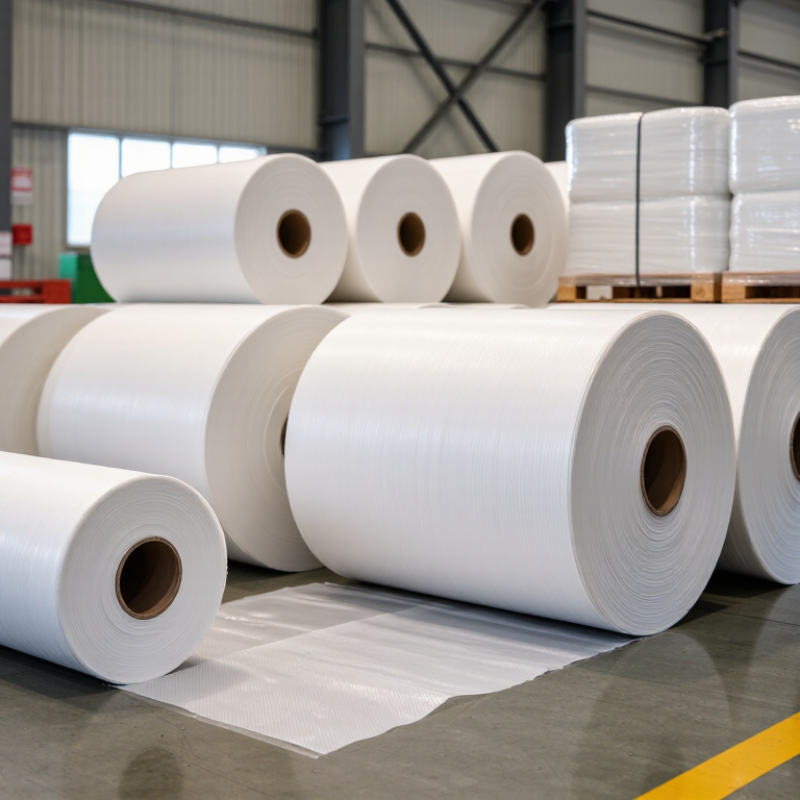
Non-woven geotextiles are permeable sheets made by bonding synthetic fibres, often through needle punching or heat. Unlike woven fabrics, their fibres form a random web. Water can pass through while soil particles are retained, depending on the fabric’s pore structure and installation. They commonly provide filtration and drainage beside retaining walls, separation beneath roads, and erosion control on slopes. Under a gravel road, for example, the fabric helps keep soft subgrade from mixing with the stone layer. It is not a substitute for correct grading or compaction.
Industry forecasts indicate rising demand: Allied Market Research estimated the global geotextiles market at US$6.7 billion in 2020 and projected US$12.2 billion by 2030. This is a market forecast, not a measure of project performance. For buyers comparing suppliers, ask for test results covering tensile strength, puncture resistance, water flow, and apparent opening size. The right choice depends on soil, load, drainage needs, and installation conditions. A high strength figure alone can mislead.
Tips: Check the product roll label and test report before installation. Protect fabric from prolonged sunlight, and avoid dragging it across sharp aggregate. Small site details matter. Even good material can wrinkle or clog if the design overlooks local soil fines.
Best Non-Woven Geotextile Suppliers in China for Global Buyers — What Non-Woven Geotextiles Are and Where They Are Used
Typical resin density (g/cm³)
Non-woven geotextiles are commonly made from polypropylene (PP) or polyester (PET) fibers. Their density differs by polymer, while the finished fabric’s mass per unit area depends on its construction. These fabrics are used for separation, filtration, drainage, and protection in roads, railways, retaining structures, and drainage systems. Values shown are approximate typical resin densities and can vary by grade.
How China’s Supplier Market Serves Global Buyers
China’s nonwoven geotextile supplier market serves global buyers through a mix of large production facilities and specialized manufacturers. Buyers can often compare different fabric weights, roll widths, and packaging options within one sourcing region. That range is useful, but a broad catalog does not guarantee a product suits a specific project.
Clear specifications make supplier discussions more productive. Share the required mass per square metre, tensile strength, elongation, and filtration needs, along with the intended soil and installation conditions. Ask for current test reports and confirm which test methods were used. A sample roll can reveal practical details too, including fabric feel, edge quality, and how easily material unwinds on site. Small checks matter.
Export experience varies. Some suppliers provide clear packing lists, loading photos, and shipment updates; others may need more direction. Confirm roll dimensions, core size, moisture protection, and pallet requirements before production. Discuss sample lead time and production capacity in writing, then verify key claims against documents rather than relying on a polished catalog. One detail is easy to miss: shipping cost can change substantially with roll size and container loading. Buyers should also allow time for independent testing when project requirements are strict. A low price may be attractive, but it is not enough evidence of consistent quality.
Which Product Specifications Buyers Should Compare
China’s nonwoven geotextile suppliers offer many grades, but buyers should compare test results, not just roll prices. Grand View Research estimated the global geotextiles market at about USD 8.2 billion in 2023 and projected 6.2% annual growth through 2030. Market growth does not make every product suitable. Numbers need context.
For separation and filtration, compare apparent opening size and permittivity. ASTM D4751 measures opening size; ASTM D4491 measures water flow. For installation durability, request grab tensile and puncture results, commonly tested under ASTM D4632 and D6241. The FHWA’s Geosynthetics Engineering manual, NHI-07-092, stresses selecting materials by function and installation conditions. Ask for the test method, sample direction, and report date. A single “grams per square metre” figure cannot show how fabric performs under a loaded aggregate layer.
Also check polymer type, roll width, thickness, and stated tolerances. Compare values at the same test conditions; otherwise, supplier data may look stronger than it is. Request a current certificate and a production sample, then inspect bonding, edges, and consistency under light. I would recheck this. A higher strength value may matter less than suitable permeability or opening size for the soil. Specification sheets can still leave gaps, so confirm the intended soil, drainage path, and installation stress before placing a bulk order.
How to Assess and Verify Potential Suppliers
Grand View Research’s 2024 geotextiles market report estimated the global market at roughly US$7 billion in 2023, with annual growth above 6% projected through 2030. This broad category includes woven and non-woven products, so the figure is context, not proof of demand for a specific grade. For buyers, it does make careful supplier checks worthwhile. Request a current factory audit, production capacity, and traceable roll records. Ask for samples from routine production, not only hand-selected pieces. Numbers need context.
Compare test reports with your project specification. FHWA’s Geosynthetic Design and Construction Guidelines (NHI-07-092) discusses properties such as tensile strength, apparent opening size, and permittivity. Ask which methods the supplier uses, including ASTM D4632 for grab tensile strength and ASTM D4751 for apparent opening size. Confirm that reports identify the tested product, date, and laboratory. Check certificates against actual labels and roll weights. A neat certificate can still describe another product.
For a practical check, inspect sample edges and measure mass per unit area across several spots. Request production-lot records and a written process for handling failed tests. Independent testing is valuable when specifications are strict. One limitation remains: a passing sample cannot prove every shipment matches it. I would treat that gap as a reason to verify shipment records, not as a reason to distrust every supplier.
What to Consider When Placing and Shipping an Order
When comparing non woven geotextile suppliers in China, define the project before requesting a price. State the required mass per unit area, roll width, length, and intended use. Ask for current product data and test results that match the quoted grade. A sample helps. Check its texture and dimensions, but remember that a small sample cannot confirm consistency across a full production run.
Confirm how rolls will be wrapped and marked before the order is finalized. Ask whether packaging protects the fabric from rain, dirt, and rough handling during loading. For sea freight, compare the packed roll dimensions with your container plan; bulky rolls can reduce usable space. Make sure the invoice, packing list, and product description use consistent details. Small errors matter.
Agree on a pre-shipment inspection method, including how many rolls will be checked and which measurements matter. Clarify who arranges transport, insurance, and customs paperwork, and confirm the delivery schedule in writing. Leave room for production and port delays. A careful plan still cannot prevent every delay, and I would not treat a promised dispatch date as a guaranteed arrival date. Ask for updates if the schedule changes.
FAQS
Compare apparent opening size, water flow, grab tensile strength, puncture resistance, polymer type, roll width, and thickness. A weight figure alone is not enough.
Opening size helps assess soil retention, while water flow indicates drainage capacity. Check both against the soil and drainage path.
Confirm that results use the same test conditions and methods. Check sample direction, report date, and tested product details.
Check bonding, edges, and consistency under light. Measure mass per unit area at several spots. Small differences can matter.
Request current factory audit information, production capacity, traceable roll records, and production-lot documentation. Verify labels against certificates.
No. A passing sample cannot prove every roll matches it. Compare shipment records and consider independent testing for strict specifications.
Not automatically. Suitable permeability and opening size may matter more for a specific soil. I would recheck the project conditions.
Confirm the intended soil, drainage path, installation stress, and product tolerances. Request routine-production samples, not only selected pieces.
Conclusion
Non Woven Geotextile is a permeable fabric used in civil engineering and landscaping to separate soil layers, filter water, protect surfaces, and support drainage. Common applications include roads, railways, embankments, retaining structures, and erosion-control projects. China’s broad manufacturing base offers global buyers a range of product options, production capacities, and export services, but choosing a supplier requires more than comparing prices.
Buyers should assess fabric weight, thickness, tensile strength, elongation, puncture resistance, permeability, and material consistency against project needs. Supplier evaluation can include reviewing technical data sheets, sample quality, production controls, relevant testing records, and communication responsiveness. Before placing an order, confirm specifications, quantities, packaging, lead times, payment terms, and inspection arrangements in writing. Also consider shipping methods, delivery schedules, and how the products will be protected during transit to help ensure the order arrives in suitable condition.

Blog Tags: