
7 Tips for Choosing PP Woven Geotextile
Table of Contents
- Define Design Loads with ASTM D4595 Tensile Strength in kN/m
- Match Soil Retention Using ASTM D4751 Apparent Opening Size in mm
- Check Drainage Capacity with ASTM D4491 Permittivity in s⁻¹
- Verify Installation Survivability Using ASTM D6241 Puncture Strength in N
- Assess UV Exposure with ASTM D4355 Strength Retention After Weathering
- FAQS
- Conclusion
- Related Posts
Choosing a geotextile is not just a packaging decision; it affects drainage, soil separation, and the service life of a project. On a road shoulder, for example, the fabric must retain fine soil while allowing water to pass through. Pp Woven Geotextile is often considered when strength and separation are priorities, but the right grade depends on site conditions. One roll does not fit every job. Subgrade softness, aggregate size, water flow, installation stress, and exposure all shape what “suitable” means. Small details matter.
Before ordering, compare published tensile strength, elongation, apparent opening size, and permeability with the project specification. Ask for test methods and current product data, not just a broad claim such as “heavy duty.” Check roll width and length too; fewer seams can simplify placement, though access and handling still matter. On site, a sharp stone or tracked vehicle can damage fabric that looked adequate in a sample. Follow the manufacturer’s installation guidance, and consult a geotechnical professional when loads or soil conditions are uncertain. That step is worth it. The seven tips below focus on matching measurable properties to real conditions, checking supplier evidence, and weighing practical trade-offs before purchase. Some comparisons remain imperfect: product data cannot fully predict every field condition. Still, careful selection can reduce avoidable surprises.
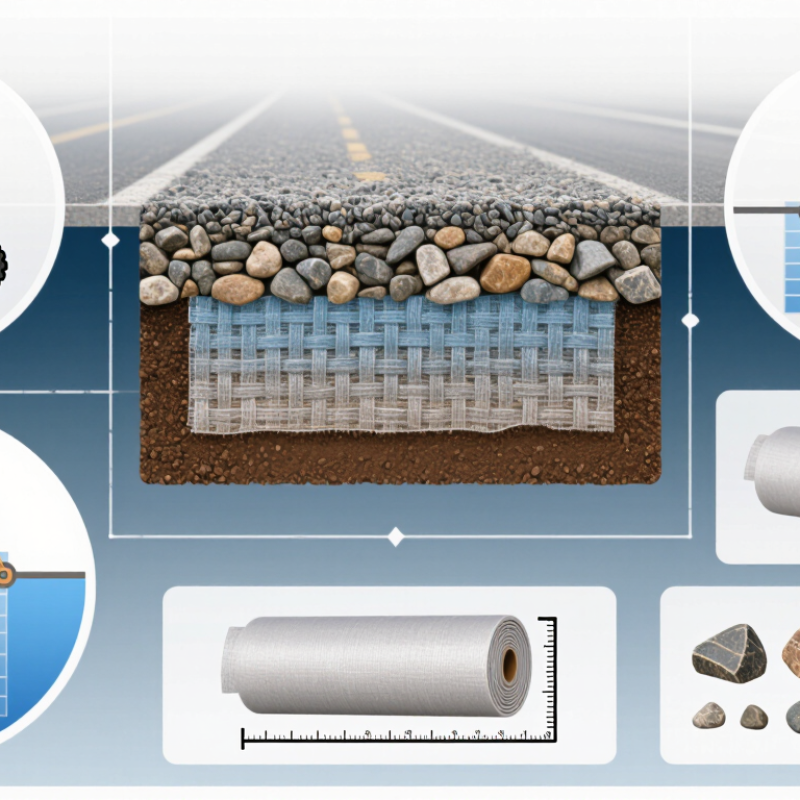
Define Design Loads with ASTM D4595 Tensile Strength in kN/m
For PP woven geotextile, compare tensile strength with the load it must carry, not with a product label alone. ASTM D4595 measures wide-width tensile properties, with strength commonly reported in kilonewtons per metre (kN/m). Check the machine and cross-machine directions separately; woven fabrics can differ considerably between them. Note the reported elongation, too. A high peak strength may not suit a design that limits movement.
Match the test data to the project’s design loads and expected strain. Then account for installation damage, long-term creep, seams, and exposure conditions using appropriate design reductions.
Do not treat the ASTM D4595 result as the allowable design strength. Ask for the test report, specimen details, and direction-specific results, rather than relying on a single headline value.
Small details matter. A tidy datasheet can make selection seem simpler than it is; the soil, placement method, and loading sequence may change what strength is actually needed. If the design depends on reinforcement, have a qualified geotechnical engineer check the assumptions and required safety factors.
Match Soil Retention Using ASTM D4751 Apparent Opening Size in mm
For PP woven geotextile, apparent opening size (AOS) helps indicate whether soil particles can pass through the fabric. ASTM D4751 measures AOS using standardized test particles; results may be stated as a sieve number or its opening size in millimeters. A smaller AOS means smaller openings, but it does not automatically mean better filtration. Match the opening size to the soil’s gradation and the project’s drainage needs.
Tip 1: Check the soil gradation report, especially the fine-particle range, before choosing an AOS. Tip 2: Compare the ASTM D4751 result in millimeters, not just a product label or sieve number. Tip 3: Confirm water flow requirements too; retaining soil is only part of the job. A fabric that is too tight may restrict drainage or clog. Small details matter.
One practical check is to compare the proposed AOS with representative site soil, not a clean sample selected for convenience. Soil varies across a work area. It can also shift during installation. Ask for current test data, and verify the stated units before ordering. AOS alone cannot predict every field result, so review permeability, soil conditions, and installation details together. I would pause if the selection rests on a single number with no supporting soil information.
7 Tips for Choosing PP Woven Geotextile: Match Soil Retention Using ASTM D4751 AOS (mm)
Compare the soil’s D85 with a candidate geotextile’s apparent opening size (AOS). The values below are illustrative design examples, not field measurements or ASTM limits; determine project criteria using the actual soil gradation, hydraulic conditions, and applicable design guidance.
Selection tips: 1) Obtain a representative soil gradation. 2) Identify D85 and other relevant particle sizes. 3) Confirm AOS using ASTM D4751 test results. 4) Treat AOS as one part of the retention assessment. 5) Check permeability and clogging risk. 6) Consider installation damage and site conditions. 7) Verify the final selection against project specifications and engineering guidance. ASTM D4751 is a test method; it does not set a universal soil-to-AOS selection ratio.
Check Drainage Capacity with ASTM D4491 Permittivity in s⁻¹
For PP woven geotextile, drainage performance is not obvious from appearance. A tight, smooth weave may look robust yet pass water slowly. ASTM D4491/D4491M measures permittivity: water flow through a geotextile under a specified head, reported in s⁻¹. Higher values indicate greater flow under the test conditions, not guaranteed field drainage. Check the test report for the specimen condition and method used.
Use a published benchmark carefully. AASHTO M 288 specifies a minimum permittivity of 0.5 s⁻¹ for subsurface drainage geotextiles; confirm the applicable edition and project specification before using it as an acceptance limit. Compare test results with the design requirement, not with a competitor’s product or an unrelated fabric class. Small number. Big consequence. A low result can restrict flow where groundwater must move toward a drain.
Ask for recent, lot-specific ASTM D4491 data, then check whether soil fines could clog the openings. Permittivity alone does not establish filtration compatibility or long-term performance. In practice, a clean laboratory sample can outperform fabric installed against silty soil. That detail is easy to overlook. Review the soil gradation, installation conditions, and the drainage path alongside the reported s⁻¹ value.
Verify Installation Survivability Using ASTM D6241 Puncture Strength in N
7 Tips for Choosing PP Woven Geotextile
Tip: Check ASTM D6241 puncture strength in N, not just fabric weight. The test measures the force needed for a plunger to puncture a specimen. A higher value may indicate greater resistance, but it does not guarantee survival at your site. Compare results with the project specification and intended installation conditions.
Tip: Match the test result to the ground and aggregate. Sharp, angular stone can stress fabric more than rounded gravel. Consider the expected fill size, drop height, subgrade firmness, and placement equipment. A laboratory number is useful, but field conditions can be rougher. Small details matter.
Ask for test data that identifies the method and reports results consistently. Compare like with like; different test methods or specimen conditions can make figures misleading. Also review seams and handling plans, since puncture resistance alone cannot prevent damage from dragging or poor placement. I would not select a fabric from one number alone. Check the full specification, then confirm that crews can install it without stretching, tearing, or trapping debris underneath.
Assess UV Exposure with ASTM D4355 Strength Retention After Weathering
7 Tips for Choosing PP Woven Geotextile
Assess UV Exposure with ASTM D4355 Strength Retention After Weathering
Polypropylene can lose tensile strength when sunlight breaks down its polymer chains. This matters when rolls sit uncovered beside a road or drainage trench. ASTM D4355/D4355M evaluates geotextile deterioration under xenon-arc light, moisture, and heat. The test compares tensile strength after exposure with the original strength. Ask for the exposure duration and retained-strength result, not just a general claim of “UV resistant.”
AASHTO M 288 uses 50% retained strength after 500 hours as a UV-stability criterion for applicable geotextile classes. Treat this as a specification benchmark, not a service-life forecast. A 500-hour result does not equal 500 hours outdoors. Real exposure changes with latitude, season, shade, and installation timing. That distinction matters. A pale, open worksite can expose fabric more severely than a shaded stockpile.
Compare test results for the actual product and, where possible, the supplied lot. Check that the report identifies the test method, exposure period, and tensile test procedure. Then compare those details with the project specification. If fabric will remain exposed during construction, plan prompt covering and ask the engineer to confirm acceptable exposure limits. Lab conditions cannot reproduce every field condition, and a strong test result alone may not settle the decision. I would still check how long the rolls may sit uncovered on site.
7 Tips for Choosing PP Woven Geotextile - Assess UV Exposure with ASTM D4355 Strength Retention After Weathering
| Tip | What to Check | How to Assess It | Why It Matters |
|---|---|---|---|
| 1. Match the geotextile to its function | Separation, stabilization, reinforcement, or filtration requirements | Define the project function and review the relevant design requirements before comparing products. | Woven geotextiles can provide tensile reinforcement and separation, but suitability depends on the application and design. |
| 2. Check tensile properties | Tensile strength and elongation in the machine and cross-machine directions | Compare test results with the project specification, and confirm the test method and direction reported. | Strength and deformation behavior affect installation performance and the geotextile’s ability to meet design demands. |
| 3. Evaluate UV exposure | Expected sunlight exposure before covering, plus any exposure during storage and installation | Estimate the likely exposure period and protect rolls from prolonged direct sunlight where practicable. | Ultraviolet radiation, moisture, and heat can deteriorate polymer geotextiles and reduce tensile strength over time. |
| 4. Request weathering test details | Results from ASTM D4355/D4355M, where applicable | Ask for the reported exposure duration, test conditions, initial tensile strength, weathered tensile strength, and test direction. | ASTM D4355/D4355M evaluates geotextile deterioration after exposure to light, moisture, and heat in a xenon-arc apparatus. Results should be interpreted in the context of the project specification. |
| 5. Compare strength retention | Percentage of tensile strength retained after weathering | Calculate: strength retention (%) = weathered tensile strength ÷ initial tensile strength × 100. Compare results only when the test conditions and reporting basis are comparable. | A retention percentage helps describe the change in tensile strength; acceptance limits should come from the project requirements, not an assumed universal threshold. |
| 6. Review physical and hydraulic properties | Mass per unit area, opening characteristics, and water-flow properties where relevant | Check certified product data against the project’s separation, filtration, and drainage criteria. | These properties help determine whether the fabric is appropriate for the soil, aggregate, and water-flow conditions at the site. |
| 7. Confirm installation and quality controls | Roll condition, handling guidance, seams or overlaps, and lot-specific documentation | Inspect delivered rolls, follow the installation specification, minimize unnecessary exposure, and retain test and shipment records. | Careful handling and traceable documentation help reduce damage and confirm that the supplied material matches the specified product requirements. |
FAQS
It measures wide-width tensile properties, usually reported in kilonewtons per metre (kN/m). Check the test report.
Woven fabrics can have different strengths in each direction. Match both results to the loads the project may apply.
No. Account for installation damage, long-term creep, seams, and exposure using suitable design reductions. A qualified geotechnical engineer should review reinforcement assumptions.
Elongation shows how much the fabric stretches under load. High peak strength may not suit a design that limits movement.
It reports the force, in newtons (N), needed for a plunger to puncture a specimen. Higher values may indicate greater resistance.
No. Sharp stone, drop height, soft subgrade, and placement equipment can affect damage. Field conditions can be rough.
Review aggregate shape and size, handling plans, seams, and subgrade firmness. Avoid dragging or stretching the fabric, and keep debris from getting trapped underneath.
Confirm that the methods and specimen conditions match. Ask for direction-specific tensile results and clear puncture test details. Numbers can mislead.
Conclusion
Choosing the right Pp Woven Geotextile starts with understanding the demands of the project. Define the expected design loads and compare them with tensile strength measured under ASTM D4595, expressed in kN/m. Next, consider the soil type and select an apparent opening size (AOS) that supports soil retention, using ASTM D4751 results in millimeters as a guide. For applications where water must pass through the fabric, check permittivity under ASTM D4491, reported in s⁻¹, to assess drainage capacity.
Also evaluate how the material may withstand handling and placement by reviewing puncture strength under ASTM D6241, measured in newtons. Finally, account for sunlight exposure during storage or installation by checking strength retention after weathering under ASTM D4355. Comparing these test results with site conditions helps narrow the options and supports a more informed selection for the intended use.

Blog Tags: