
What Is Permeable Geotextile Used For?

Time:2026-10-29 Author:Sienna
0%

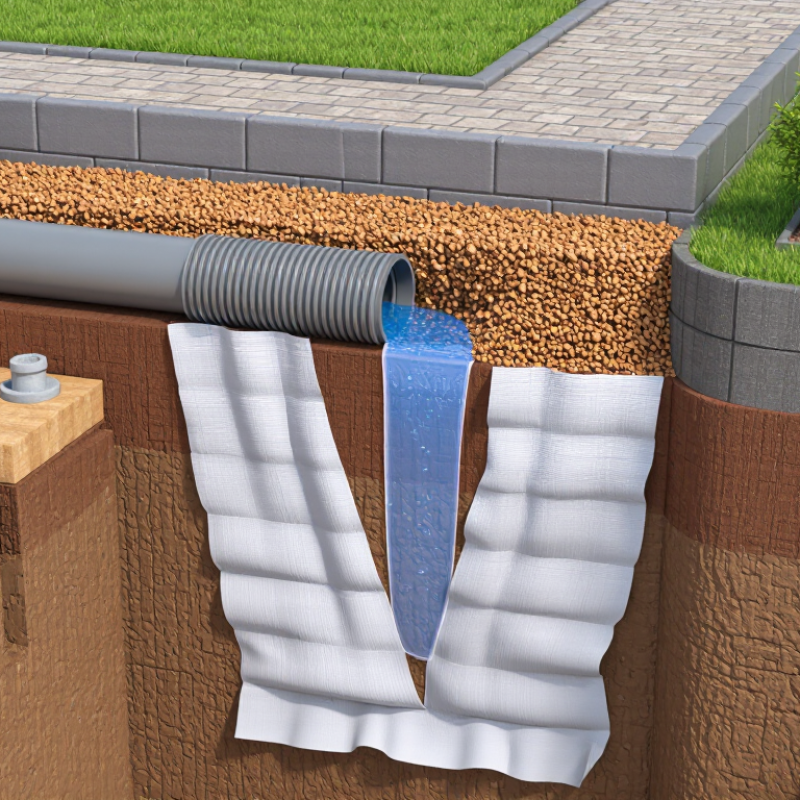
Permeable Geotextile is a porous synthetic fabric used to manage water and soil in construction and landscaping. It lets water pass while helping limit the movement of soil particles. That simple function can protect drainage paths and keep different soil layers from mixing. The fabric is often placed beneath gravel roads, around drainage pipes, behind retaining walls, and under paths or landscaped areas. Picture rainwater moving through a stone trench while fine soil stays mostly out of the pipe. That is the practical role it can play.

Its performance depends on more than whether water can pass through it. Soil type, expected water flow, fabric openings, strength, and installation conditions all matter. A product suited to coarse gravel may not filter fine silt effectively. Not every site needs the same fabric. Designers and installers should check product specifications against site conditions, rather than choosing by weight or price alone. The wrong selection, or a torn fabric, can allow clogging or soil migration; poor grading and blocked outlets can cause problems too. Permeable Geotextile is useful, but it is not a cure for every drainage issue. Proper design and careful placement matter. Even then, performance can be affected by changing ground conditions, so expectations should stay realistic.
What Is Permeable Geotextile Used For?

What Permeable Geotextile Is and How It Works

Permeable geotextile is a porous synthetic fabric that allows water to pass while limiting soil movement. Its openings act like a carefully sized sieve: water can move through, while fine particles are held back. The balance matters. If the openings are too large, soil may migrate; if too small, clogging can restrict flow. The Federal Highway Administration’s Geosynthetic Engineering manual (NHI-07-092) describes geotextiles in separation, filtration, drainage, and reinforcement applications. These functions can overlap beneath a gravel path, where fabric separates soil from stone and helps water drain through the layer.

Permeability is not simply “how fast water passes.” ASTM D4491/D4491M measures water flow through geotextile under a specified test condition and reports permittivity, a property used in design comparisons. Engineers also consider soil particle size, hydraulic conditions, fabric openings, and the risk of clogging; a high laboratory flow value alone does not guarantee good field performance. In practice, the fabric must suit the soil and installation. A torn edge or folded seam can create a path for sediment. Small details matter. FHWA guidance is useful, but real sites vary, and choosing a fabric from one number alone deserves a second look.

How It Filters Soil While Allowing Water to Pass

Permeable geotextile works like a selective filter between soil and water. Its openings let water pass while holding back soil particles that could wash away or clog a drain. In a roadside trench, for example, water can move toward a perforated pipe while the surrounding soil stays in place. The filter must match the soil. A fabric that is too open may lose fine particles; one that is too tight may restrict flow.

The Federal Highway Administration’s Geosynthetic Design and Construction Guidelines (NHI-07-092) treats soil retention, water permeability, and clogging resistance as connected filter-design checks.

There is no single fabric opening size that suits every site.

ASTM D4491/D4491M measures geotextile permittivity, reported in inverse seconds, to describe water flow through the fabric under a test head. That laboratory value helps compare products, but it does not reproduce every field condition.

Small pores help. But they can clog. Soil gradation, groundwater pressure, and installation damage also matter.

A design can look right on paper and still underperform if fine sediment builds up against the fabric; that is an easy detail to underestimate.

Where Permeable Geotextile Is Commonly Used

What Is Permeable Geotextile Used For?

Where Permeable Geotextile Is Commonly Used

Permeable geotextile is often placed beneath roads, driveways, and gravel parking areas. Between soft native soil and crushed stone, it helps limit mixing while letting water pass through. That separation can reduce rutting and keep the aggregate layer more stable. On a driveway, the benefit is often easiest to notice after rain, when fewer soft spots form. It is not a replacement for proper grading or a well-built base. Details matter.

Retaining walls and French drains are common uses, too. Behind a wall, suitable fabric can help keep fine soil from entering drainage aggregate, where it might slow water movement. Around a perforated drainpipe, it can act as a filter, but the fabric must match the surrounding soil. A poor match may clog. That part is easy to overlook.

On garden paths, the fabric can separate soil from gravel and reduce material migration under foot traffic. It is also used beneath riprap on slopes or channel edges, where it helps keep underlying soil from washing through the stone. Still, fabric alone cannot solve unstable ground or poor drainage. Site conditions, installation, and water flow all deserve a close look.

How to Choose the Right Geotextile for a Project

Choosing the right permeable geotextile starts with the soil, water flow, and job—not just fabric strength. For a driveway over silty ground, the fabric must separate soil from aggregate while allowing water to pass. A drain trench has a different priority: keep fine particles out of the pipe without restricting flow. FHWA’s geosynthetics guidance treats filtration, separation, and drainage as distinct design functions. A single product may not suit all three equally well.

Check the project’s soil gradation, expected flow, and installation stress, then compare test data for apparent opening size, permittivity, and strength. AASHTO M 288-17 specifies a minimum permittivity of 0.5 sec⁻¹ and a maximum apparent opening size of 0.60 mm for subsurface-drainage geotextiles. These are application-specific criteria, not universal targets. Fit matters. On site, overlaps, punctures, and clogged fabric can undermine a good specification; even careful selection cannot fix poor placement. One detail is easy to miss: water flow through clean fabric does not prove long-term performance in fine, wet soil. Check the design conditions and installation requirements before choosing.

What Is Permeable Geotextile Used For?

Permeable geotextiles allow water to pass while helping retain soil. They are commonly used for filtration and drainage in roads, retaining structures, and other soil-contact projects. A key selection check is apparent opening size (AOS), reported using an equivalent U.S. sieve size.

How to use this chart: The bars show nominal sieve openings, not universal geotextile specifications. Choose a geotextile by checking its reported AOS against the project soil gradation and drainage requirements; confirm the design criteria for the specific application.

Key Installation Practices and Performance Factors

What Is Permeable Geotextile Used For?

Key Installation Practices and Performance Factors

Permeable geotextile separates soil from aggregate while allowing water to pass. It is used beneath road bases, around drainage trenches, and behind retaining structures. Performance depends on matching the fabric’s opening size and flow capacity to the surrounding soil. A fabric that passes water but loses too much soil can undermine the work.

Prepare a firm, even subgrade. Remove sharp stones, roots, and standing water before unrolling the fabric. Keep it flat, with enough slack to follow the ground without wrinkles or tension. Overlap edges according to the project design and soil conditions; there is no reliable universal overlap width. Cover the fabric promptly, and keep construction equipment off it unless the specified protection method allows traffic. Small tears matter.

For drainage design, check permittivity, apparent opening size, and resistance to clogging, not just fabric weight. The FHWA’s NHI-07-092 Geosynthetics Engineering manual identifies 0.1 s⁻¹ as a common minimum permittivity benchmark for less critical drainage applications; demanding conditions may call for higher values. ASTM D4491 measures geotextile water permittivity. Field performance can still differ from laboratory results, especially when fine soil clogs the fabric or installation damages it. Inspect seams and exposed areas before covering. That check is easy to skip.

FAQS

What is permeable geotextile?

It is a porous synthetic fabric. Water passes through, while the fabric helps hold back soil particles. Think of a fine sieve.

How does it help beneath a gravel driveway?

It separates soft soil from crushed stone and lets water drain through. After rain, this can mean fewer soft spots. It cannot replace a solid base.

Where is permeable geotextile commonly used?

It is used beneath roads, paths, parking areas, retaining walls, and drainage trenches. It can also sit under riprap on slopes or channel edges.

How should the fabric be chosen?

Match its opening size and water-flow capacity to the surrounding soil and site conditions. A high flow rating alone is not enough. That detail is easy to miss.

What should be done before installation?

Prepare a firm, even surface. Remove sharp stones, roots, and standing water before unrolling the fabric. Keep it flat.

How much should fabric edges overlap?

Follow the project design and soil conditions. There is no dependable universal overlap width, so guessing may create weak seams.

Can geotextile clog or tear?

Yes. Fine soil can clog it, while sharp stones or equipment can cause tears. Inspect seams and exposed areas before covering.

Does geotextile solve poor drainage or unstable ground?

No. It can help separate and filter materials, but grading, soil stability, and water flow still matter. Fabric alone is not a fix.

Conclusion

Permeable Geotextile is a porous fabric designed to separate soil layers, filter particles, and let water flow through. Its openings allow water to pass while retaining soil, helping reduce erosion, limit the movement of fine particles, and support effective drainage. Unlike an impermeable barrier, it manages water without completely blocking its movement through the ground.

It is commonly used beneath roads, paths, retaining structures, drainage systems, and landscaping. Choosing the right geotextile depends on soil conditions, expected water flow, load requirements, and the project’s purpose. Installation also matters: prepare a stable surface, lay the fabric flat without damaging it, overlap adjoining sections as needed, and cover it promptly with suitable material. Correct selection and careful installation help the fabric maintain filtration, separation, and drainage performance over time.

Sienna

Sienna

Sienna is a skilled marketing professional with a deep expertise in our company’s core products and services. With a passion for innovation and detail, she plays a pivotal role in crafting insightful blog posts that not only highlight the unique features of our offerings but also provide valuable......