
Top 8 HDPE & Geosynthetic Civil Engineering Systems
Direct from Tai'an Changhong Engineering Materials manufacturing lines: certified high-performance containment films, dynamic drainage cores, and geocellular subgrade reinforcement.

Flexible Soft Permeable Pipe for Water Seepage Management Solutions
Product Details & Spec


Plastic Blind Filter Ditch Pipe & Durable Drainage Board System
Product Details & Spec
Coarse Textured Surface Flexible Polyethylene Geomembrane
Product Details & Spec
Gravel Grid Plastic Geocell for Soft Soil & Steep Slope Protection
Product Details & Spec
Double Color HDPE / LLDPE Polyethylene Earthwork Geomembrane
Product Details & Spec
China 8 HDPE Manufacturing & Global Geosynthetics White Paper
In modern geotechnical containment and mega-infrastructure design, the deployment of engineered High-Density Polyethylene (HDPE) represents the critical barrier between hazardous anthropogenic contaminants and natural hydrological systems.
Polymer Resin Rheology
Uncompromising barrier performance starts with the molecular weight distribution (MWD) and bimodal density structure of virgin polyethylene resin. High-density formulations exceed 0.941 g/cm³, incorporating broad molecular architectures that simultaneously optimize tensile stress crack resistance (ESCR) and melt flow index (MFI) control under high-speed multi-layer blown film extrusion.
- Zero post-consumer regrind contamination
- Carbon black masterbatch micro-dispersion (>2.0%)
- High oxidative induction time (OIT > 100 min)
Micro-Texture Shear Physics
On steep sloped containment—such as gold/copper heap leach pads or municipal solid waste (MSW) cell sidewalls—smooth geomembranes create hazardous slip planes. Co-extruded nitrogen gas injection texturing produces structured micro-asperities that interlock with non-woven geotextile cushion interfaces, raising the interface friction angle up to 28°–34°.
- Consistent asperity height exceeding 0.40–0.60 mm
- Elimination of interface slip plane shear failure
- Preserved core elongation at break (>100%)
Thermally Welded Dual Seaming
Liner integrity depends upon field weldability. Chinese Industry 4.0 automated plants formulate HDPE resins tailored for wedge welding temps of 380°C–420°C, producing hot-wedge seams with continuous internal pressure channels. Field pneumatic testing allows non-destructive air-pressure verification along miles of containment liners before earth backfill.
- Dual hot-wedge pneumatic pressure channels
- Seam peel and shear strengths exceed parent sheet
- Direct extrusion-welding for penetrations & sumps
China Factory 4.0: Supply Chain Resilience & Co-Extrusion Advantages
How Tai'an Changhong Engineering Materials transforms upstream petrochemical polymers into micron-calibrated civil engineering barriers through intelligent manufacturing workflows.
Continuous Ultrasonic Gauging & AI Thickness Tracing
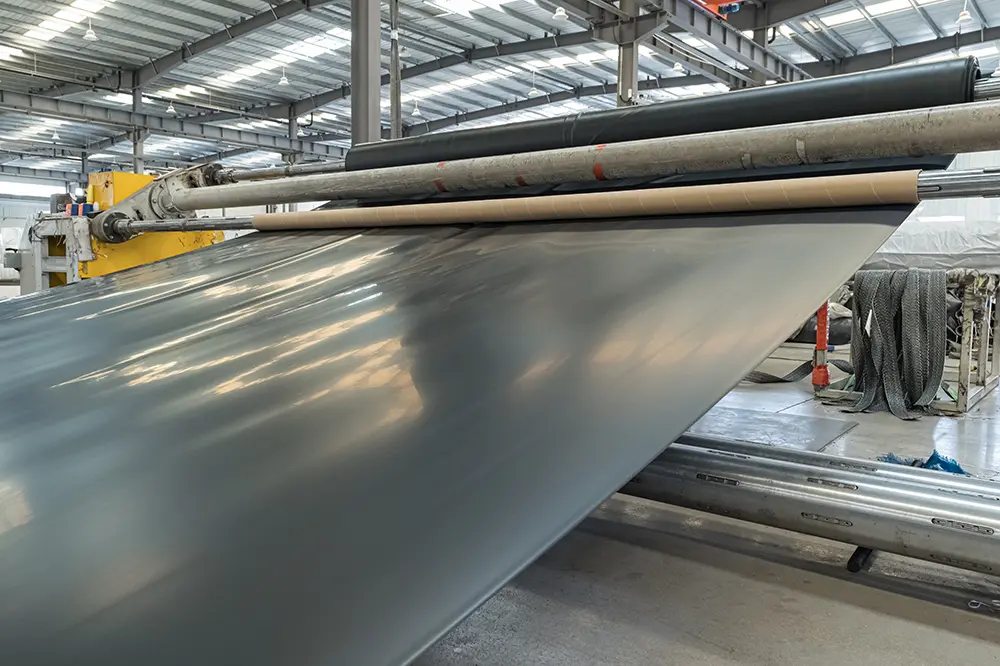
Traditional calendered liners suffer from cross-web thickness variance, leading to thin stress concentrations susceptible to puncturing. Modern Chinese HDPE factories implement 360-degree oscillating internal bubble cooling (IBC) systems integrated with beta-ray or ultrasonic online thickness profilers. The feedback loop dynamically adjusts the thermal die lip bolts every 90 seconds, securing thickness uniformity within ±3% across an ultra-wide 8-meter roll sheet.
This closed-loop automated precision guarantees that an engineered 1.5 mm (60 mil) liner never drops below ASTM D5199 minimum nominal requirements at any coordinate along a 150-meter roll run.
Upstream Chemical Integration & Raw Material Security
Situated within the Shandong chemical and manufacturing corridor, production facilities enjoy direct pipeline access to polymer synthesis giants (Sinopec, PetroChina). Virgin polyethylene resin lots are accompanied by verified Melt Index (ASTM D1238) and Density (ASTM D1505) certificates. Batch integrity is confirmed by in-house labs prior to pneumatic vacuum transfer into the extrusion silos.
By pairing raw material supply security with an integrated portfolio (geomembrane, non-woven geotextile cushion, geocell confinement, and siphonic drainage plates), international contractors can source a fully matched hydraulic cross-section in a single container loading schedule.
Engineering Specification Matrix (ASTM vs. GRI-GM13 Benchmark)
A transparent comparative breakdown of critical physical, mechanical, and longevity parameters across virgin HDPE liners produced for tier-1 environmental and civil projects worldwide.
| Evaluated Material Property | Standard Test Method | 1.0 mm (40 mil) Spec | 1.5 mm (60 mil) Spec | 2.0 mm (80 mil) Spec | Functional Impact on Infrastructure |
|---|---|---|---|---|---|
| Polymer Density | ASTM D1505 / D792 | ≥ 0.940 g/cm³ | ≥ 0.940 g/cm³ | ≥ 0.940 g/cm³ | Chemical Inertness Resists acid, base, hydrocarbon leachates |
| Yield Strength (Tensile) | ASTM D6693 (Type IV) | ≥ 15 kN/m | ≥ 22 kN/m | ≥ 29 kN/m | Hydrostatic Yield Resists subgrade deformation pressure |
| Break Strength (Tensile) | ASTM D6693 (Type IV) | ≥ 27 kN/m | ≥ 40 kN/m | ≥ 53 kN/m | Ultimate Safety High-stress slope stability reserve |
| Elongation at Break | ASTM D6693 (Type IV) | ≥ 700 % | ≥ 700 % | ≥ 700 % | Subsidence Flex Bridges localized soil sinkholes |
| Puncture Resistance | ASTM D4833 / FTMS 101 | ≥ 320 N | ≥ 480 N | ≥ 640 N | Rock Cushion Prevents aggregate puncture under overburden |
| Stress Crack Resistance (SP-NCTL) | ASTM D5397 (App.) | ≥ 500 hours | ≥ 500 hours | ≥ 500 hours | ESCR Life Prevents brittle macro-fissuring over decades |
| Standard OIT (Oxidative Time) | ASTM D3895 (200°C; O2) | ≥ 100 min | ≥ 100 min | ≥ 100 min | Thermal Longevity Antioxidant pack prevents molecular decay |
| High-Pressure OIT (HP-OIT) | ASTM D5885 (150°C; 3.5 MPa) | ≥ 400 min | ≥ 400 min | ≥ 400 min | Extreme UV & Heat High-stress retention in exposed installations |
Engineered Cross-Section Blueprints Across Five Core Sectors
Integrated geotechnical configurations designed to balance barrier containment, filtration mechanics, hydrodynamic discharge, and geomechanical soil consolidation.
Landfill & Solid Waste Containment
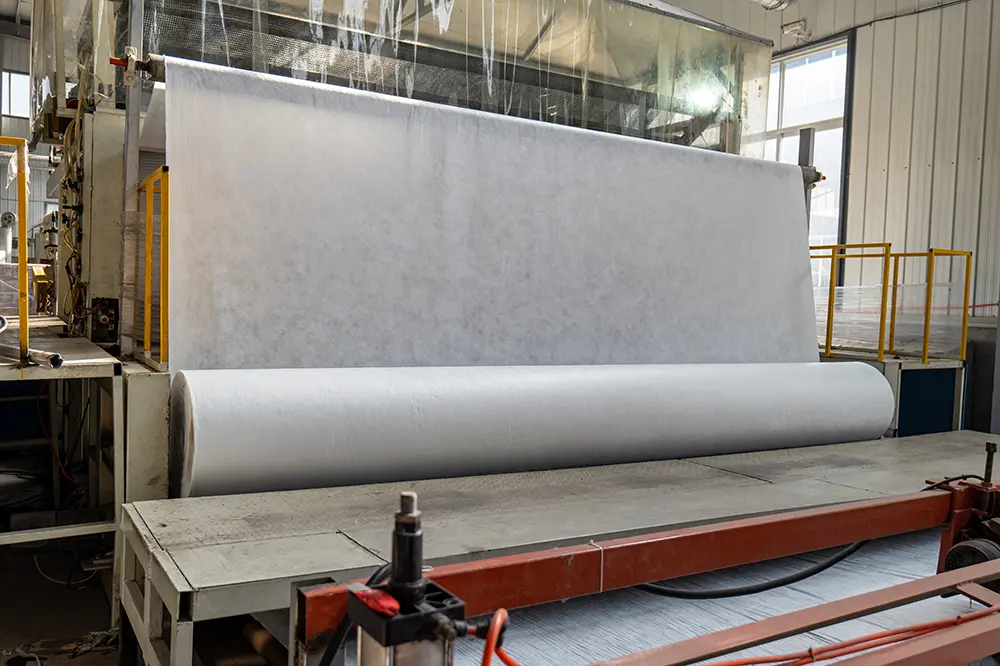
Leachate containment requires a zero-breakdown composite system. The basal cross-section integrates a compacted clay subgrade, overlain by 2.0 mm smooth HDPE geomembrane protected on both sides by non-woven needle-punched geotextiles (400–600 g/m²). On steep perimeter slopes, single or double textured HDPE is specified to maintain interface slope stability under heavy compaction loads.
- EPA Subtitle D compliance ready
- Methane cap & leachate lagoon compatibility
Mining Tailings & Heap Leach Pads
Handling cyanide or sulfuric acid pregnant leach solution (PLS) under high ore-stack overburden pressure requires high puncture resistance and extreme chemical resilience. Coarse textured HDPE liners lock together with protective geotextiles and drainage nets, delivering rapid pregnant solution drawdown to recovery sumps without liner puncture.
- Resistant to pH extremes (<1.0 to >13.5)
- Heavy overburden survival (>50m ore stacks)
Canals, Reservoirs & Aquaculture
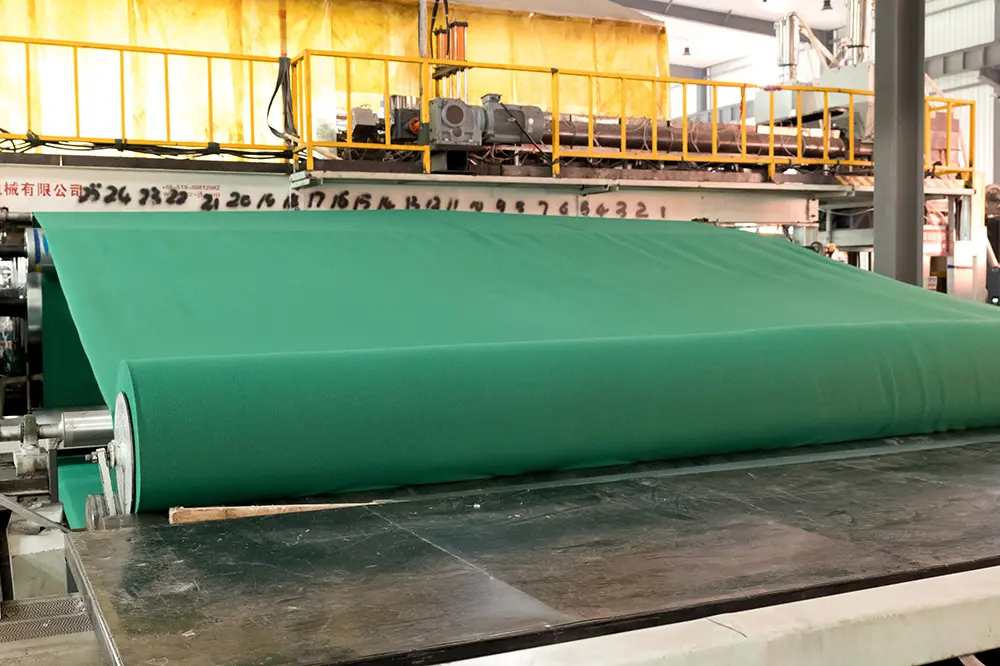
For irrigation canals, municipal raw water storage reservoirs, and intensive shrimp/fish aquaculture farms, smooth HDPE and flexible LLDPE/EVA liners prevent seepage losses (>99% water preservation). Blue and green dual-color membranes improve underwater visual clarity, promote easy sanitation, and blend smoothly with surrounding terrain.
- Zero plasticizer leaching (aquatic non-toxic)
- Prevents bank soil erosion and scouring
Underground Tunnels & Sponge Cities
Deep foundation basements, subway conduits, and underground utility tunnels utilize EVA/LLDPE flexible earthwork films coupled with plastic blind drain ditches and concave-convex drainage cells. This combination absorbs hydrostatic pressure and diverts groundwater seepage into collection systems before structural water leaks can form.
- Siphonic rainwater harvesting & green roofs
- High elongation accommodates micro-settlement
Highways, High-Speed Rail & Geocells
Soft soil foundations across highways, railway subgrades, and coastal reclamation zones utilize 3D ultrasonic-welded HDPE geocells. When packed with gravel, sand, or onsite recycled aggregate, the 3D honeycomb structure confines lateral movement, distributes point-loads evenly, and prevents base failure.
- Cuts aggregate base course thickness up to 50%
- Stabilizes steep cut-and-fill slope faces
Refineries & Tank Secondary Containment
Above-ground storage tank (AST) farms and chemical processing facilities demand secondary barrier security against hydrocarbon spills. HDPE liners are welded into impervious basins beneath tanks. These catch unexpected valve failures or spills, preventing benzene, toluene, and petroleum fractions from penetrating underlying aquifers.
- Hydrocarbon diffusion rate < 10^-13 m/s
- Direct extrusion-boot pipe seal compatibility
Global Procurement Intelligence: Navigating Lead Times, QA & TCO
Evaluating total cost of ownership (TCO), quality assurance protocols, and container staging when sourcing factory-direct geosynthetics from China.
Total Cost of Ownership (TCO) vs. Raw Material Unit Rate
Sophisticated EPC procurement teams look beyond square-meter material quotes. True lifecycle cost depends on roll dimensions, field welding speed, freight space optimization, and failure risk reduction. By procuring wide-width rolls (up to 8.0 meters), field installations cut total seam footage by up to 25% compared to narrower 6-meter formats. Fewer seams directly reduce on-site labor hours, minimize testing overhead, and limit seam leak risks.
Tai'an Changhong optimizes roll lengths tailored to container weight capacities (typically 20–26 metric tons per 40ft High Cube container). This maximizes ocean freight utility and avoids dead-space logistics surcharges.
Comprehensive Mill Test Reports (MTR) & Third-Party Testing
Every commercial shipment leaves our plant backed by complete traceability documentation. Resin certificates link raw feedstocks to production lots, backed by detailed QA/QC inspections for thickness, density, carbon black content, dispersion quality, and tensile yield performance.
We routinely partner with internationally accredited third-party laboratories (such as TRI Environmental, SGS, and Intertek) to conduct independent verification tests (ASTM D5397 for Stress Cracking, ASTM D3895 for OIT, and ASTM D6693 for Tensile Properties) before vessel departure, ensuring seamless acceptance on international civil projects.
Worldwide Regulatory Compliance & Quality Certification
Aligning manufacturing QA/QC with the world's most rigorous geotechnical, environmental protection, and building material standards.
GRI-GM13 Benchmark
Standard specification for smooth and textured high-density polyethylene geomembranes set by the Geosynthetic Research Institute (GRI), widely recognized across North and South America, the Middle East, and Australia.
CE Mark Compliance
Fully compliant with EN 13249 through EN 13257 European harmonized standards, certifying structural characteristics, long-term durability, and environmental safety across European Union civil applications.
ISO 9001 / 14001
Certified Quality and Environmental Management Systems governing each stage: raw resin intake, co-extrusion blow molding, needle punch finishing, automated roll packing, and containerized dispatch.
ASTM Test Methods
Rigorous in-house and third-party laboratory verification: ASTM D5199 (Thickness), ASTM D1505 (Density), ASTM D6693 (Tensile), ASTM D5397 (SP-NCTL Stress Crack), and ASTM D3895 (OIT Thermal Longevity).
Tai'an Changhong: Production Scale & Integrated Product Series
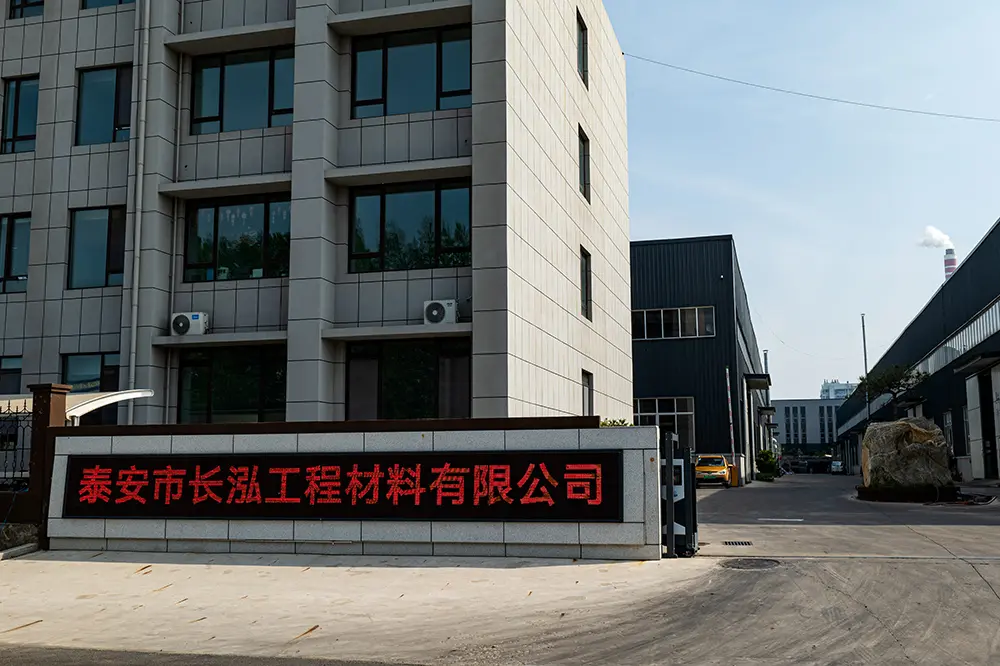
Located at the foot of Mount Tai in Shandong, China, our specialized plant operates over 20,000 square meters of production space, manufacturing complete geosynthetic cross-sections under one roof.
Full-Spectrum Geosynthetics Manufacturing Under One Roof
Tai'an Changhong Engineering Materials Co., Ltd. is not an export trading intermediary. We are a direct manufacturing enterprise equipped with self-operated import and export licenses. Our plant produces smooth, coarse textured, and dual-color geomembranes across HDPE, LDPE, LLDPE, and EVA polymers, complemented by polyester/polypropylene filament and short-fiber needle-punched geotextiles, heavy-duty HDPE geocells, concave-convex drainage sheets, geogrids, flexible permeable pipes, and underground blind drains.
Because every layer of the hydraulic containment cross-section is produced in-house, we eliminate distributor markups, ensure chemical compatibility between layers, and maintain uniform quality controls from initial raw polymer pellets to on-site roll delivery.
Custom Engineering Dimensions & Export Staging
Engineering plans rarely match off-the-shelf inventory. We tailor thickness (0.2 mm through 3.0 mm), roll widths (from 1.0 m up to 8.0 m), roll lengths (50 m to 200 m), and color combinations (black, green, blue, two-tone) to match project blueprints.
Every roll is wrapped in high-strength woven geotextile packaging with dual lifting straps, barcode labeling, and moisture barriers. This ensures products arrive in clean, uncompromised condition at remote mining, waste disposal, or highway sites worldwide.
Field Proven Installations & Engineering Desk Knowledge
Real-world containment, soil stabilization, and hydraulic seepage projects installed with Changhong engineering materials.

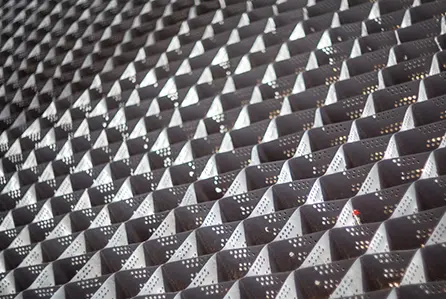
Riverbank Geocell Stabilization
Combines cellular confinement with needle-punched non-woven geotextile filtration, stabilizing bank slopes against flood scouring.
High-Speed Rail Subgrade
Heavy-duty polyester filament geotextiles prevent aggregate intrusion into soft clay subgrades, preserving railway track geometry.
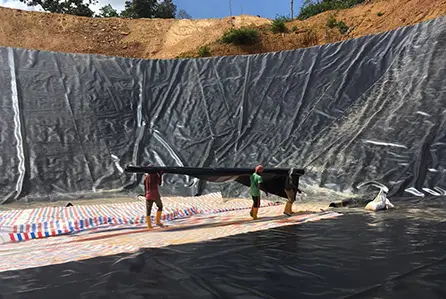
Mega Reservoir Anti-Seepage
Welded 1.5 mm HDPE geomembranes stop subsurface basin seepage, conserving millions of cubic meters of fresh water.
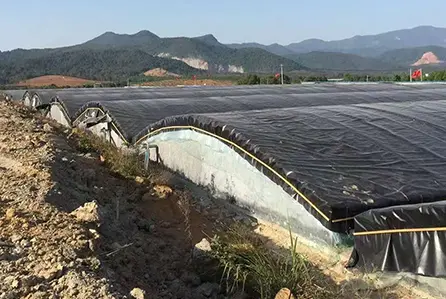
Eco-Agricultural Water Storage
Co-extruded green and black polyethylene membranes support sustainable irrigation and intensive aquaculture pond containment.
Global Sourcing Selection: 8 Core Geosynthetic Systems
Select any engineered product below to request mill test reports, container load configurations, and wholesale factory pricing direct from China.

Sponge City Siphonic Waterproof and Drainage Collection System
Product Details & Spec
Needled Filament Geotextile for Hydraulic & Roadbed Isolation
Product Details & Spec
Coarse Textured Surface Flexible Polyethylene Geomembrane
Product Details & Spec
Water Accumulation and Drainage Plate Concave-Convex Cell
Product Details & Spec
Gravel Grid Plastic Geocell for Soft Soil & Slopes
Product Details & Spec
Frequently Asked Questions on HDPE Manufacturing & Global Procurement
Authoritative technical answers addressing the resin formulations, site welding protocols, compliance verification, and shipping configurations most frequently raised by international engineering teams.