
Direct-From-Plant Geosynthetic Containment & Drainage Lineup
Engineered via co-extrusion blow molding and calendar systems, certified for ultra-low permeance, chemical inertness, and structural slope stability.








The Global Geomembrane & Geosynthetics Landscape
A rigorous examination of geotechnical containment mandates, critical environmental mitigation, and structural performance criteria across modern international mega-projects.
Stringent Containment Mandates
Environmental statutory frameworks across North America (EPA Subtitle D), the European Union (Landfill Directive 1999/31/EC), and the Asia-Pacific region demand near-zero hydraulic conductivity (< 1×10⁻¹³ cm/s). Primary containment requires chemically resilient HDPE sheet liners that arrest persistent toxic leachates, volatile hydrocarbons, and heavy metal ions from entering vulnerable regional aquifers.
Heavy Overburden Mining Demands
Global extraction of precious metals and critical energy transition minerals (copper, lithium, nickel, gold) relies profoundly on continuous heap leaching processes and expansive tailings storage facilities (TSFs). Geomembrane liners must endure multi-megapascal vertical overburden stress while resisting severe chemical degradation from aggressive sulfuric acid and cyanide pregnant leach solutions (PLS).
Climate Adaptation & Water Security
With accelerating climatic volatility, civil infrastructure programs worldwide are allocating billions to combat canal transmission losses and extreme flash flooding. Prefabricated polymeric geosynthetics—integrating needle-punched geotextiles, three-dimensional geocells, and high-flow siphonic drainage plates—now constitute the baseline technical specification for sustainable flood management and sponge cities.
Why China’s Taian Manufacturing Hub Leads Global Geosynthetic Output
Combining world-scale polymer refining integration, automated continuous blown-film calendering, and optimized logistics for rapid high-tonnage project fulfilment.
Upstream Polymer Integration
Chinese manufacturers operate in close synergy with state-of-the-art domestic and international petrochemical refineries (Sinopec, PetroChina, Borouge, Sabic). This guarantees immediate access to prime, bimodal virgin polymer resins (medium-to-high molecular weight distribution) tailored specifically for environmental stress crack resistance (ESCR > 500 hours via ASTM D5397 Single Point NCTL).
Wide-Width Blown Extrusion Lines
Our Taian manufacturing facilities utilize multi-layer co-extrusion blown-film lines capable of producing single sheets up to 8 meters in width. Wider roll geometry dramatically reduces on-site wedge welding seams by up to 35%, slashing field installation schedules, minimizing leak failure vectors, and cutting QA/QC thermal testing costs for civil engineering contractors.
Rigorous Multi-Standard Compliance
Operating under ISO 9001, ISO 14001, and ISO 45001 accreditations, our production adheres unconditionally to international benchmarks: GRI-GM13 (for standard and textured HDPE), GRI-GM17 (for LLDPE), and ASTM test methods. Every batch receives documented testing for carbon black content, carbon black dispersion, standard/high-pressure OIT (oxidative induction time), and melt index.
Taian Changhong Production & Operational Capacity
A specialized, vertically integrated production campus situated at the foot of Mount Tai, serving global civil and environmental contracts.
Engineering Geo Liners for Extreme Failure Conditions
Real-world geotechnical failures happen at the interface boundaries. We engineer multi-tier material composites to eliminate common operational vulnerabilities.
Steep Slope Interface Slippage
The Risk: On waste containment slopes and mining heap pads exceeding 3H:1V, smooth geomembranes exhibit inadequate friction against soil cushion layers, inducing planar slope slumping under saturated conditions.
The Solution: Blown co-extrusion with nitrogen injection produces coarse textured surface geomembranes with friction angles exceeding 30 degrees, locking adjacent non-woven geotextiles into place.
Differential Subgrade Settlement
The Risk: Subsidence in karst topography, soft alluvial clays, or variable landfill refuse induces localized multiaxial tensile strain spikes, threatening catastrophic membrane puncture.
The Solution: Pairing flexible EVA / LLDPE liners with three-dimensional HDPE geocells and needle-punched long-fiber geotextiles bridges subgrade voids and distributes concentrated mechanical loads across broader foundation planes.
UV Degradation & Thermal Creep
The Risk: Exposed geomembrane liners in arid, high-altitude mining basins suffer aggressive thermo-oxidative photo-degradation, triggering premature embrittlement and micro-fissuring.
The Solution: High-purity synergistic additive packages featuring 2.0–3.0% fine-particle furnace carbon black (Category 1 or 2) and hindered amine light stabilizers (HALS), preserving high retention OIT values over 20+ years of direct exposure.
Engineering Selection & Specification Guidelines
A reference matrix aligning geotechnical application requirements with polymeric barrier classes, testing standards, and typical target parameters.
| Application Sector | Recommended Polymer & Profile | Nominal Thickness | Key Testing Standard | Core Performance Advantage |
|---|---|---|---|---|
| Sanitary Landfill (Base Liner) | Smooth HDPE Geomembrane | 1.5 mm – 2.5 mm | GRI-GM13 / ASTM D5994 | Exceptional resistance to chemical leachate cocktails and low diffusion rates. |
| Mining Heap Leach Slopes | Single/Double Coarse Textured HDPE | 1.5 mm – 2.0 mm | ASTM D5397 / ASTM D7466 | Elevated interface friction angle preventing shear sliding under saturated ore overburden. |
| Aquaculture & Irrigation Basins | Smooth LDPE / HDPE / Dual-Color | 0.75 mm – 1.0 mm | GRI-GM17 / ASTM D5199 | Nontoxic, UV stabilized, easy double-track fusion welding, low seepage losses. |
| Tunnel & Basement Waterproofing | Flexible EVA / LLDPE Earthwork Sheet | 1.2 mm – 2.0 mm | GB/T 17643 / EN 13491 | High multi-axial tensile elongation accommodating irregular structural shifts. |
| Subgrade & Embankment Support | HDPE Geocell + Non-Woven Geotextile | 100 mm – 200 mm cell | ASTM D1603 / ASTM D4632 | Confinement of granular aggregate to mitigate lateral displacement and rutting. |
| Sponge City & Green Roof Decks | Concave-Convex Drainage Plate + Siphonic System | 10 mm – 30 mm cup | JC/T 2112 / ISO 12958 | Simultaneous retention and rapid subterranean discharge without relying on gravity fall. |
Procurement Framework for EPC Contractors & Global Wholesalers
A systematic operational roadmap designed to mitigate commercial risk, container stowage losses, and regulatory border delays for international import teams.
Factory Audits & Lot Traceability
Taian Changhong provides complete digital batch tracking from raw polymer pellet procurement down to individual finished rolls. Comprehensive Certificate of Analysis (COA) dossiers are supplied prior to container dispatch, verifying resin melt flow index (MFI), density (ASTM D1505), oxidative induction time (OIT), and mechanical break strengths.
Optimized Container Logistics
Roll diameter, core sleeve thickness, and outer woven geotextile wrapping are optimized for maximum volume utilization in 40ft High Cube containers. High-tensile strapping and protected core plugs prevent roll ovalization during intermodal ocean transit, safeguarding roll runout uniformity during heavy unrolling on site.
FOB/CIF Commercial Transparency
Operating with full self-operated import and export licenses, we eliminate intermediary trading brokerage costs. Global contracts are managed with transparent Incoterms (FOB Qingdao/Tianjin, CIF, CFR, or DDP) alongside complete customs declaration packets including Form E/Certificate of Origin, Bill of Lading, and international test validation.
Technological Frontiers Shaping Next-Generation Geo Liners
From conductive co-extruded layers enabling real-time spark leak detection to chemically enhanced elevated-temperature geomembranes.
Co-Extruded Conductive Spark Liners
Conductive-backed geomembranes integrate an ultra-thin carbon-enriched lower layer. When paired with high-voltage spark testing equipment (ASTM D7240), field crews can inspect 100% of an installed liner surface in post-construction QA sweeps, identifying pinhole punctures invisible to conventional visual inspection.
High-Temperature & Brine Containment
Advanced geothermal extraction, coal-seam gas produced water basins, and thermal industrial evaporation ponds generate sustained fluid temperatures exceeding 60°C. Specially formulated bimodal resin compounds prevent rapid antioxidant depletion, sustaining high-stress crack resistance under continuous elevated temperature stress.
Circular Economy & Carbon Footprint
Through closed-loop trim recovery during factory edge trimming and high-efficiency electric extruder drives, Chinese manufacturing hubs are driving down embodied carbon per square meter. In comparative cradle-to-gate LCA metrics, synthetic polymeric barriers represent lower carbon impacts than multi-foot compacted clay liner alternatives.
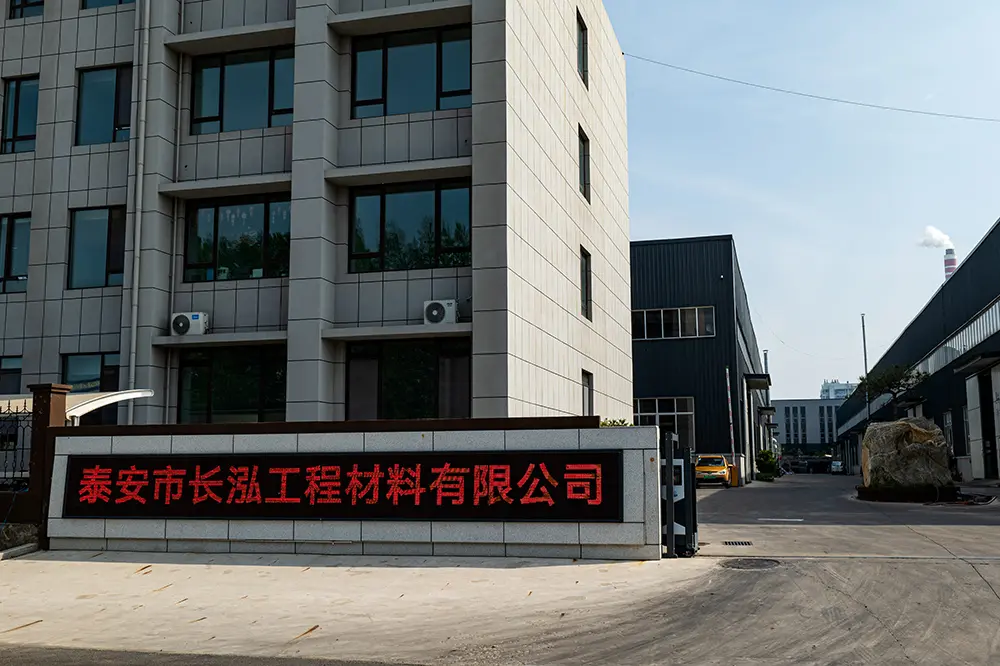
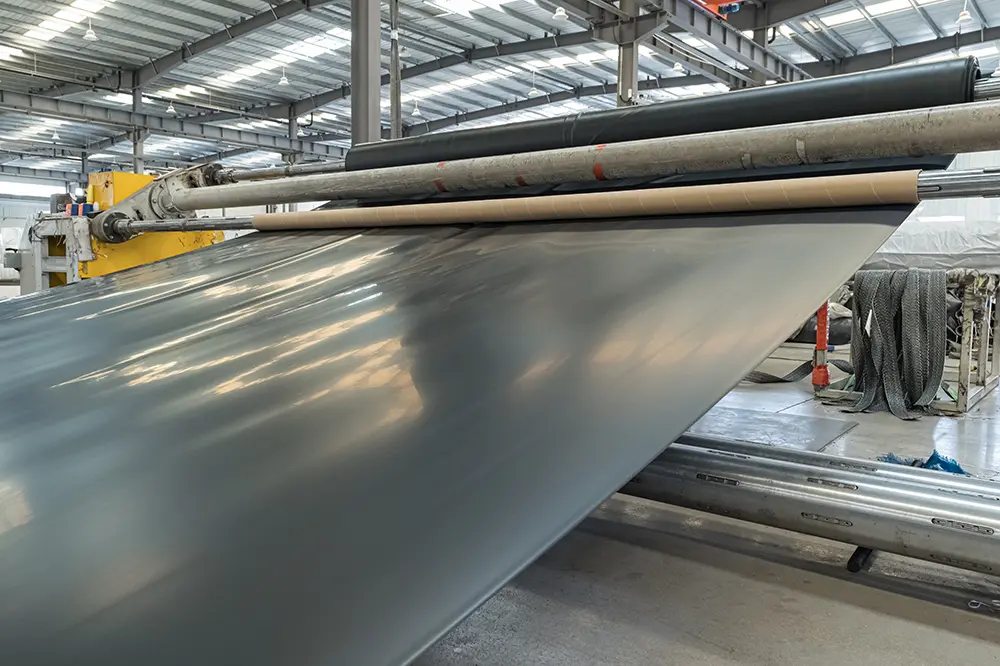
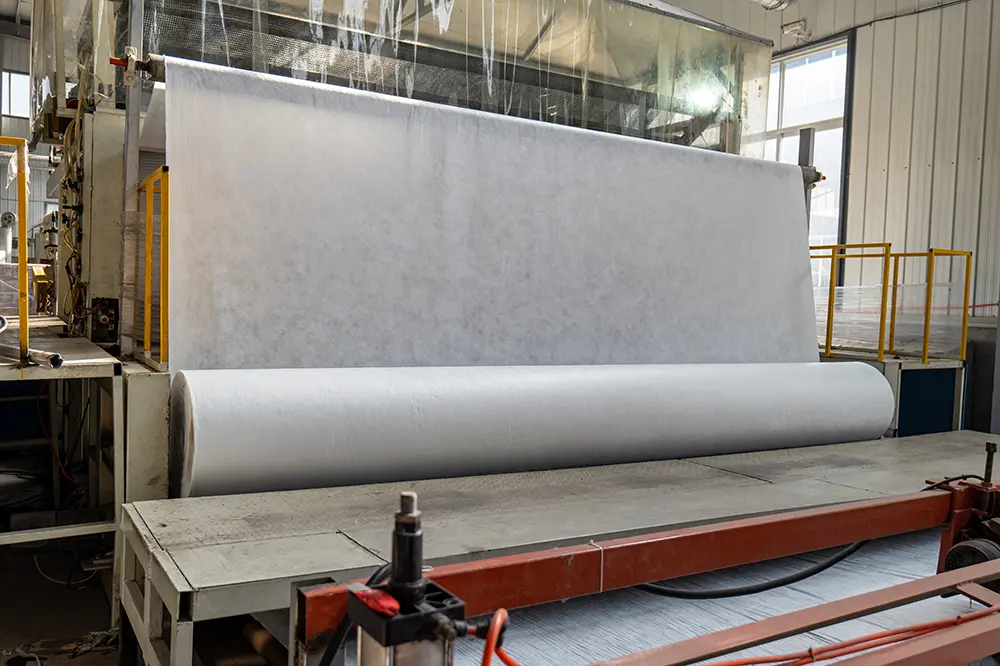
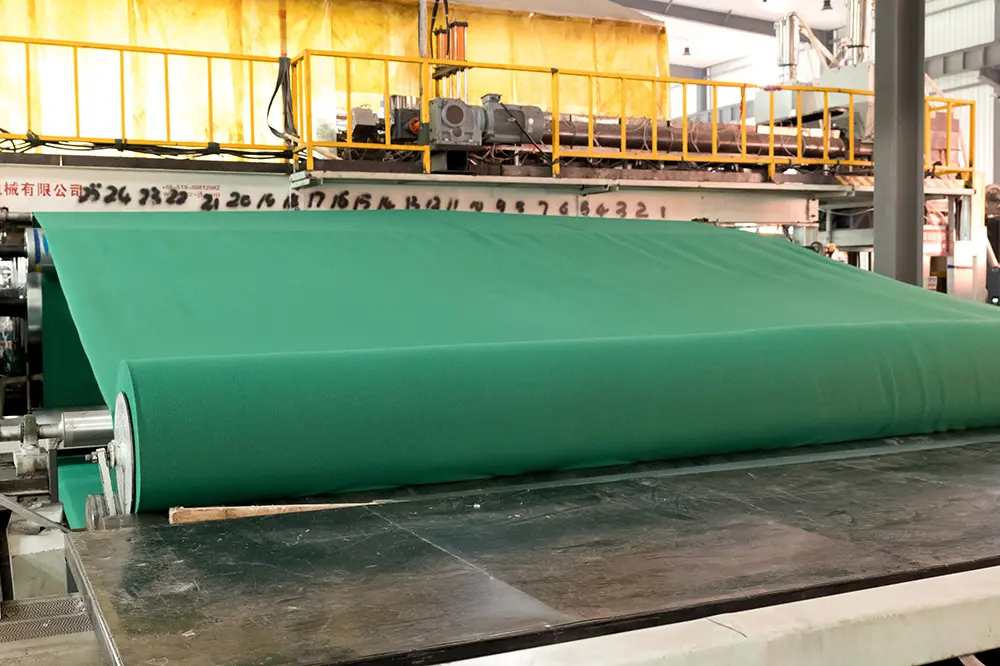
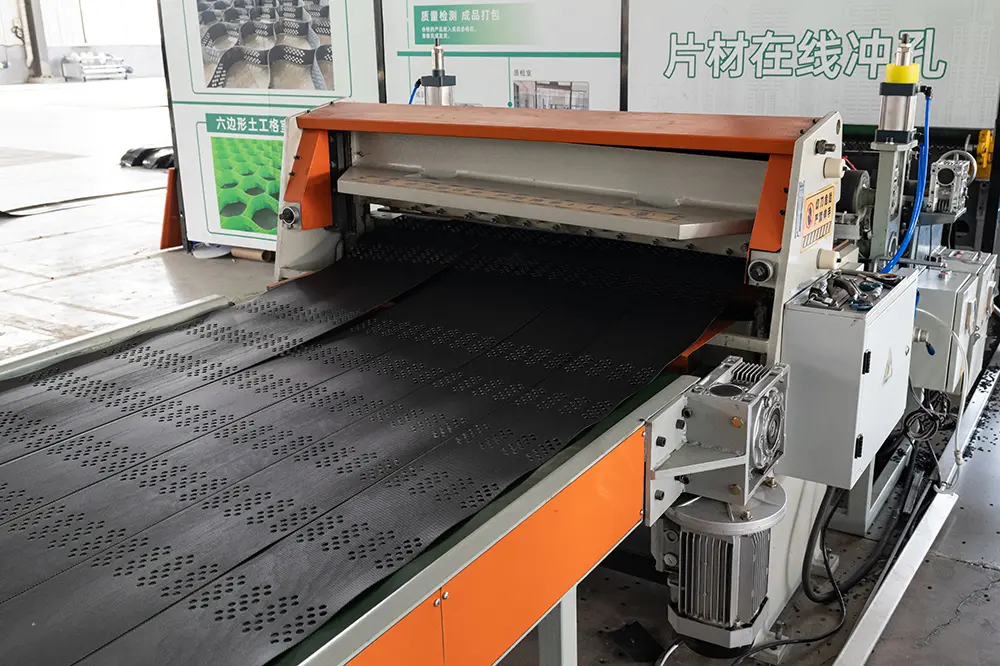
Manufacturing Facilities & Heavy Processing Equipment
A transparent look at Taian Changhong Engineering Materials Co., Ltd.'s 20,000 m² workshop, extrusion lines, inventory staging, and loading terminals.
Frequently Asked Questions by Geosynthetic Specifiers
Expert answers addressing seam thermal bonding, chemical compatibility, subgrade soil preparation, and international container shipments.
What is the fundamental difference between HDPE, LDPE, and LLDPE geomembranes?
How is seam integrity verified during installation of your geomembranes?
Do you manufacture geomembranes compliant with the GRI-GM13 standard?
What minimum roll width and length options can be customized?
How does textured geomembrane enhance steep slope factor of safety?
What is your typical production lead time and loading capability for 50-ton+ orders?
Comprehensive Product Selection for Project Procurement
Certified containment sheets, civil separation fabrics, and subterranean water collection systems for direct-from-factory international dispatch.

