High-Quality Best Geo Membrane Suppliers & Companies
A comprehensive architectural briefing on high-density polyethylene (HDPE), LLDPE, and polymeric hydraulic barriers engineered for critical waste containment, heap leach mining, and sponge city civil infrastructure.
Direct manufacturer-grade membranes and subterranean hydraulic conveyance components fabricated to international ASTM and GRI-GM specifications.
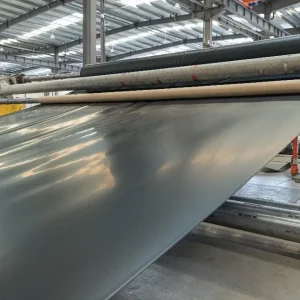
GM-HDPE-01
Wholesale HDPE Earthwork Film, Construction Material HDPE Liner Geomembrane
High-density polyethylene hydraulic barrier formulated with 97.5% virgin resin, carbon black, and high-performance hindered amine light stabilizers (HALS) for severe chemical and UV resistance.
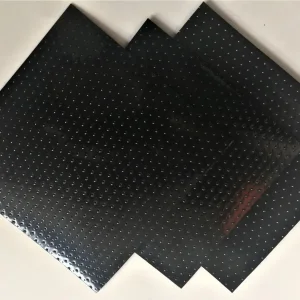
High-Quality Coarse Textured Surface Flexible Polyethylene Earthwork Film Geomembrane
Blown-film co-extruded textured surface creating superior interface shear friction with geotextiles and soil layers, engineered explicitly for steep slope landfill containment and mining pads.
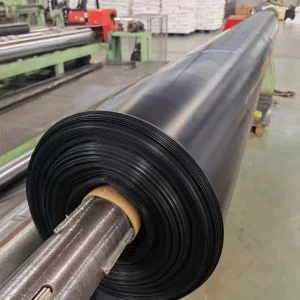
Custom LDPE EVA LLDPE Smooth Surface Flexible Polyethylene Earthwork Film
Enhanced multi-polymer flexibility incorporating Ethylene Vinyl Acetate (EVA) and Linear Low-Density Polyethylene to accommodate severe differential subgrade settlement and structural curves.
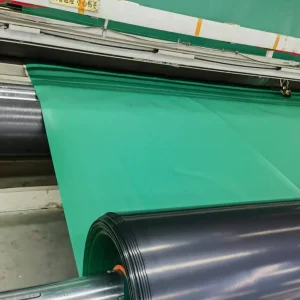
China HDPE LDPE EVA LLDPE Double Color Polyethylene Earthwork Film
Co-extruded dual-color geomembrane (Black/White or Black/Green) reflecting solar radiation to lower thermal expansion wrinkles while providing immediate visual detection of scoring and installation damage.
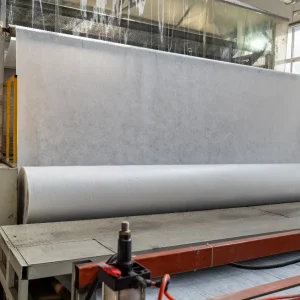
China Retaining Wall Roadbed Hydraulic Engineering Isolation Needled Filament Geotextile
Continuous-filament virgin polyester (PET) needle-punched non-woven geotextile designed to serve as a high-puncture-resistance cushion shield and filtration layer for containment liners.
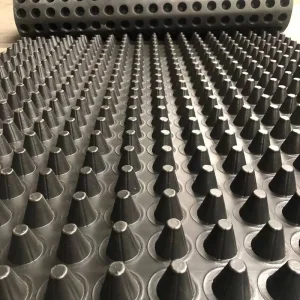
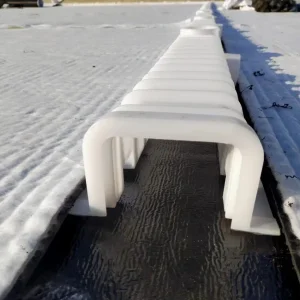
Wholesale Water Accumulation And Drainage Plate Concave and Convex Drainage Cell
High-compressive-strength dimpled polymer drainage board functioning as a hydrostatic pressure relief corridor and water-retention matrix for roof decks and basement retaining walls.
The Global Commercial Reality of Geosynthetic Containment
Analyzing procurement standards, environmental mandates, and capacity transformations governing the modern geosynthetics manufacturing sector.
Across modern environmental engineering, civil works, and resource extraction sectors, the role of low-permeability synthetic barriers has transitioned from a specialized design consideration to a globally mandated baseline. Driven by stricter ecological safeguards—including the EPA Subtitle D regulations in North America, the EU Industrial Emissions Directive (IED 2010/75/EU), and international tailings dam management standards under the Global Industry Standard on Tailings Management (GISTM)—procuring engineering-certified geomembranes is now central to environmental risk mitigation.
Global infrastructure investments demand materials engineered for operating lifetimes exceeding 50 to 100 years. The global polyolefin geomembrane market is projected to sustain compound annual growth rates driven by massive investments in hazardous industrial waste neutralization, mining heap leaching infrastructure, lithium extraction brine ponds, and the rehabilitation of municipal solid waste (MSW) landfills. Taian Changhong Engineering Materials Co., Ltd. operates at the center of this industrial reality, manufacturing from a state-of-the-art 20,000 m² facility with an annual output surpassing 5,000 metric tons of specialized geosynthetic materials.
Key Industry Realization: The Real Risk of Lower Polymer Grades
Global field telemetry indicates that over 82% of premature containment barrier failures are not caused by chemical degradation during service, but by Environmental Stress Cracking (ESC), inadequate raw material purity (such as using post-consumer regrind instead of prime virgin resin), and subgrade puncture from improper geotextile cushion design. Choosing a certified manufacturer with in-house resin quality verification is critical to structural longevity.
Virgin Resin Integrity
Every extrusion run utilizes exclusively certified prime virgin high-density and linear low-density polyethylene resin. We ensure carbon black dispersion meets Category 1 or 2 standards (ASTM D5596) without recycled additives.
Integrated Cost Structure
Operating as an end-to-end self-operated exporter eliminating trading middlemen. We offer direct mill pricing combined with transparent roll labeling, Mill Test Certificates (MTC), and project-specific roll length fabrication.
Comprehensive Testing
Factory production control covers Standard Oxidative Induction Time (Std. OIT, ASTM D3895) and High-Pressure OIT (HP-OIT, ASTM D5885) to verify antioxidant depletion resistance under elevated operational temperatures.
Technical Specification Matrix
Standard Polymeric Property Comparison (GRI-GM13 vs. GM17 Compliance)
A reference engineering matrix evaluating raw material physical characteristics, elongation thresholds, and stress fracture resistance.
Physical / Chemical Property
Test Standard
HDPE (Smooth GM13)
HDPE (Textured GM13)
LLDPE (Smooth GM17)
EVA / Flexible Composite
Base Density (g/cm³)
ASTM D1505 / D792
≥ 0.940
≥ 0.940
0.920 – 0.939
0.915 – 0.930
Tensile Strength at Break (N/mm)
ASTM D6693 (Type IV)
≥ 27 (at 1.0mm)
≥ 15 (at 1.0mm)
≥ 20 (at 1.0mm)
≥ 18 (at 1.0mm)
Elongation at Break (%)
ASTM D6693 (2 in/min)
≥ 700%
≥ 100%
≥ 800%
≥ 850%
Notched Constant Tensile Load (NCTL)
ASTM D5397 (App.)
≥ 500 hours
≥ 500 hours
N/A (Stress-Crack Resistant)
Immune (Highly Ductile)
Standard OIT (min)
ASTM D3895
≥ 100 minutes
≥ 100 minutes
≥ 100 minutes
≥ 60 minutes
High-Pressure OIT (min)
ASTM D5885
≥ 400 minutes
≥ 400 minutes
≥ 400 minutes
≥ 300 minutes
Carbon Black Content (%)
ASTM D1603 / D4218
2.0 – 3.0%
2.0 – 3.0%
2.0 – 3.0%
Optional / Pigmented
Material Selection Insights: HDPE vs. LLDPE vs. Co-Extruded Formulations
Selecting between High-Density Polyethylene (HDPE) and Linear Low-Density Polyethylene (LLDPE) depends on whether the installation is driven by chemical compatibility or physical adaptability:
High-Density Polyethylene (HDPE): Defined by high crystallinity (~70%), providing maximum chemical impermeability against hydrocarbon fuels, volatile industrial solvents, and aggressive municipal leachates. It is the premier choice for landfill basements, chemical refinery storage, and aggressive heap leaching environments.
Linear Low-Density Polyethylene (LLDPE): Exhibits lower crystallinity and elevated branch short-chain polyolefins, resulting in superior multiaxial elongation and puncture compliance. Ideal for landfill capping covers where differential settlement of decaying organic solid waste would subject rigid membranes to localized yield stresses.
Textured Membranes: Blown-film co-extrusion with nitrogen-injection texturing elevates interface friction angles up to 28°–32° against non-woven geotextiles, neutralizing rotational slope failure risks along steep embankment linings.
Engineering Solutions
Macro-Industrial Solutions Across Severe Containment Environments
Deep-layering strategies developed for hazardous containment, mining recovery, and regional water infrastructure.
Mining & Metallurgical Leaching Pads
Heap leaching for gold, copper, and lithium brine extraction uses aggressive cyanide, sulfuric acid, and alkaline reagents under extreme overburden pressures. We provide double-lined textured HDPE systems coupled with high-transmissivity geotextiles and heavy-duty blind drainage pipes, ensuring zero barren fluid loss and zero subgrade soil contamination.
Solid Waste Landfills & Leachate Retention
Modern composite bottom barriers integrate smooth HDPE primary liners protected by needle-punched polyester filament geotextiles. Leachate containment ponds utilize dual-color membranes (black underlay with a green/white surface) to minimize thermal wrinkling, facilitate acoustic hole detection, and maintain barrier integrity under decades of biological digestate.
Water Conservancy & Canal Distribution
Irrigation aqueducts, artificial reservoirs, and water storage dams often suffer over 40% water loss from porous earth substrate seepage. Continuous thermal-welded flexible polyethylene barriers eliminate subterranean percolation losses, reinforcing riverbanks when paired with three-dimensional geocell slope stabilization.
Sponge City & Urban Subgrade Systems
Underground metro tracks, parking structures, and green roof installations require integrated water storage and siphonic drainage plates. These concave-convex polymers relieve hydrostatic pressure on structural retaining walls while storing excess stormwater for passive landscape hydration.
Stringent factory production controls adhering strictly to ASTM International, GRI, and ISO 9001 frameworks.
International engineering procurements demand verifiable documentation, traceable raw materials, and precise execution on site. As a large-scale self-operated manufacturer in Taian, Shandong, China, Changhong implements multi-stage Quality Assurance (QA) and Quality Control (QC) frameworks directly aligned with ASTM test protocols:
20,000
Square Meter Modern Manufacturing Plant
5,000+
Metric Tons Annual Geosynthetic Output
15+
Advanced Extrusion Lines & Processing Units
100%
Export Traceability & Batch Mill Certification
Field Welding SOP & Non-Destructive Quality Verification
A continuous, leak-free barrier depends directly on joint seam execution. Changhong engineering teams provide technical support for automated double-track hot wedge welding and hot-air extrusion seam processes:
Dual-Track Air Channel Pressure Testing (ASTM D5820): Double-track fusion welds leave an open central channel. Field crews seal both ends, pressurize the channel to 200–250 kPa using a specialized manometer pump, and record pressure drop over 5 minutes. A pressure drop below 10% confirms seam continuity.
Vacuum Box Testing (ASTM D5641): Applied to extrusion-welded patches and intersections. A transparent vacuum box connected to a suction pump is placed over soapy water applied to the weld seam. The emergence of bubbling indicates pinpoint porosities requiring immediate re-extrusion sealing.
Electric Spark Testing (ASTM D6365): High-voltage conductive geomembrane spark testing detects micro-perforations through moisture-free dielectric resistance verification before backfilling protection layers.
Next-Generation Roadmap
The Future of Geomembrane Engineering: Digital Twins & Sustainable Polymers
Advancing geosynthetic technologies for circular economies, intelligent containment tracking, and elevated temperature endurance.
The containment industry is evolving beyond passive barrier sheets. Increasing regulatory demands and climate-induced extreme weather drive innovation in barrier formulations and structural monitoring systems. Changhong’s R&D department is focused on three key technological advancements:
1. Conductive Co-Extruded Geomembranes for Permanent Leak Detection
By incorporating a micro-thin, high-purity carbon black conductive bottom layer during primary extrusion, conductive membranes allow for non-destructive Electrical Leak Location (ELL) testing per ASTM D7953. Operators can map punctures as small as 1mm under gravel or deep water cover, drastically lowering lifecycle monitoring costs for hazardous waste facilities.
2. Elevated Temperature Geomembranes (HT-HDPE)
Industrial brine evaporators, oil sands remediation, and deep waste bioreactors often operate at sustained temperatures above 60°C to 80°C. Standard geomembranes experience accelerated antioxidant depletion and reduced stress-crack life under these conditions. Next-generation High-Temperature HDPE (HT-HDPE) blends specialized phenolic and organo-phosphite stabilizers to ensure design lifetimes exceeding 40 years even under constant thermal stress.
3. Low-Carbon Footprint Polymer Infrastructure
Comparing carbon expenditure between geosynthetic solutions and traditional civil materials (like compacted clay liners or reinforced concrete slabs) shows that geomembranes reduce embedded carbon emissions by 65% to 80%. Our ongoing investments in waste heat capture and energy-efficient multi-screw extrusion lines continue to reduce the environmental footprint of our factory in Taian.
Pairing advanced membrane barriers with subsurface filtration layers, geocells, and water collection pipes for complete installation stability.
SPONGE-SYS-09
Custom Sponge City Siphonic Waterproof and Drainage Collection System
Engineered for urban subgrades, zero-slope roof gardens, and large commercial podiums, providing rapid water collection without relying on gravity fall lines.
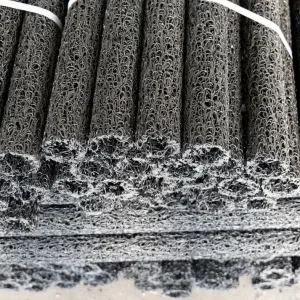
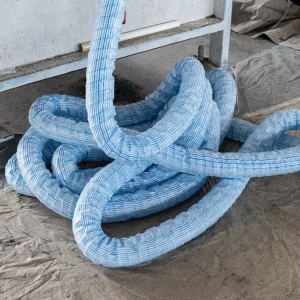
High-Quality Flexible Soft Permeable Pipe for Water Seepage Management Solutions
High-tensile spring steel wire helix encased with non-woven filtration geotextile, preventing silt clogging during subterranean foundation and retaining wall seepage relief.
China HDPE LDPE EVA LLDPE Double Color Polyethylene Earthwork Film
Reflective high-visibility two-tone membrane available in Black/Green and Black/White to lower surface heat absorption and simplify visual Quality Assurance during seam layout.
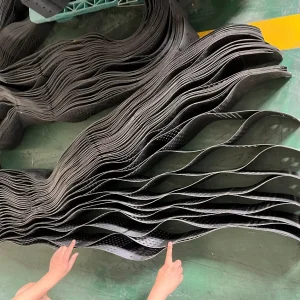
High-strength ultrasonic-welded honeycomb confinement cell matrix engineered to distribute heavy vehicular loads across weak subgrades and secure steep slopes against erosion.
China Retaining Wall Roadbed Hydraulic Engineering Isolation Needled Filament Geotextile
Non-woven needle-punched polyester fabric providing high puncture cushioning above geomembrane liners, preventing damage from rock fragments in coarse aggregate backfills.
Authoritative technical answers to core questions encountered by EPC contractors, civil design engineers, and procurement directors.
What are the definitive criteria for selecting between HDPE and LLDPE geomembranes?
Selection depends primarily on the chemical profile of the contained fluid and the anticipated subgrade differential settlement. HDPE features high crystallinity (typically 70%), providing maximum chemical impermeability against aggressive chemical leachates, industrial solvents, and mining tailings solutions. However, HDPE is stiffer. LLDPE offers higher flexibility and multiaxial elongation (>800%), making it the superior material for landfill capping closures and soft, subsiding foundation profiles where excessive tensile elongation would risk stress-cracking in HDPE.
Why is Oxidative Induction Time (OIT) critical to evaluating geomembrane lifespan?
Oxidative Induction Time (tested via ASTM D3895 Standard OIT and ASTM D5885 High-Pressure OIT) measures the operational effectiveness of antioxidant packages blended into the virgin polymer. In harsh environments (elevated heat, ultraviolet radiation, and exposure to oxidizing agents), antioxidants deplete over time. As long as residual antioxidants remain active, the polyethylene molecular chains remain protected against degradation. A high initial OIT value confirms that the liner has a long induction period before any mechanical deterioration can occur.
How does textured surface co-extrusion prevent slope failure in containment cells?
Smooth geomembranes exhibit low interface friction angles (often as low as 8°–11° against wet geotextiles or fine clays). Along 3:1 or 2.5:1 embankment slopes, this low friction introduces a major slip-plane hazard. Co-extruded textured geomembranes create micro-structured surface spikes that mechanically interlock with non-woven geotextile fibers and soil matrices, elevating friction angles up to 28°–32°. This interface shear strength stabilizes slope layers and prevents slippage during seismic or heavy rainfall events.
What are the standard quality control measures for field hot wedge welding?
CQA (Construction Quality Assurance) protocols mandate dual non-destructive and destructive testing routines. Non-destructive field verification utilizes dual-track air pressure testing (ASTM D5820), where the central air channel is pressurized to 200–250 kPa; zero pressure loss over 5 minutes verifies seam continuity. Destructive testing (ASTM D6392) involves taking field seam coupons every 150 meters and conducting tensiometer pull tests to verify both Peel Strength and Shear Strength. A successful weld exhibits a Film Tear Bond (FTB), meaning the parent sheet yields before the weld seam separates.
Can Taian Changhong customize roll dimensions, thicknesses, and dual-color configurations?
Yes. As an integrated manufacturer operating specialized multi-screw co-extrusion lines, we custom-manufacture geomembranes with thicknesses ranging from 0.5 mm to 3.0 mm, roll widths from 4.0 meters up to 8.0 meters, and custom roll lengths to minimize transverse field welds. We also manufacture dual-color liners (e.g., Black/White and Black/Green) for enhanced solar reflectance and damage identification, as well as customized geocells, needle-punched geotextiles, and subterranean drainage systems.
What advantages are offered by purchasing factory-direct from a self-operated exporter?
Procuring directly from Taian Changhong Engineering Materials Co., Ltd. eliminates third-party markups, provides direct batch traceability, and guarantees that Mill Test Certificates (MTC) correspond directly to production runs. Our dedicated export team handles international shipping documentation, container stowage optimization (protecting roll cores during transit), and provides responsive technical consultations for international civil tenders and EPC contracting specifications.