
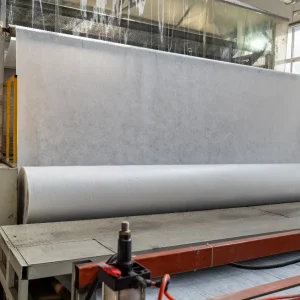
Precision Polymer Portfolio
Primary Containment & Precision Engineering Solutions
Procure certified geosynthetic barriers, hydraulic separation fabrics, and high-load containment structures engineered directly to ASTM, GRI-GM13, and ISO 9001 standards.
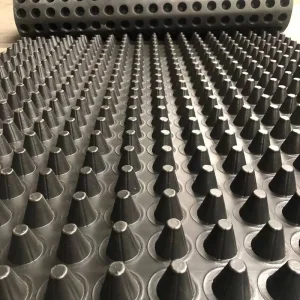
Water Accumulation & Drainage Plate
Procure Specification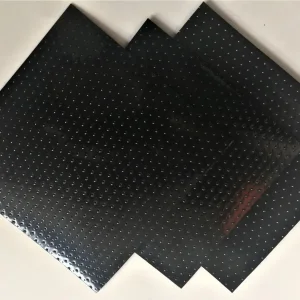
Coarse Textured Surface Geomembrane
Procure Specification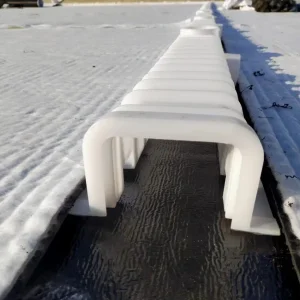
Sponge City Siphonic Drainage System
Procure Specification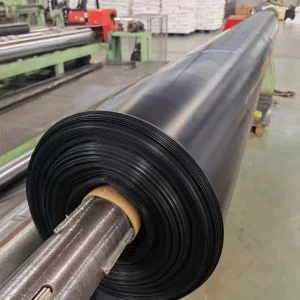
LDPE / EVA / LLDPE Smooth Earthwork Film
Procure Specification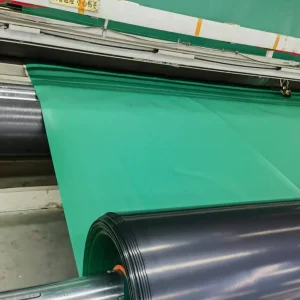
Double Color Co-extrusion Geomembrane
Procure Specification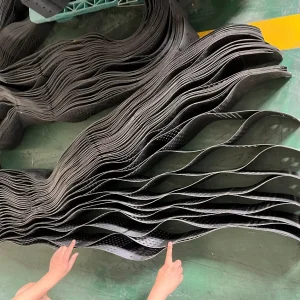
Gravel Grid Plastic Cellular Confinement
Procure Specification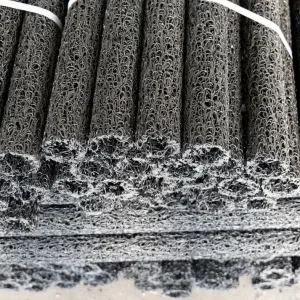
Plastic Blind Filter Drainage Pipe
Procure SpecificationMaterial Science & CNC Physics
The Physics of HDPE Machining: Semi-Crystalline Polymer Mechanics
Understanding molecular weight distribution, thermal expansion variables, and shear-induced stress during high-speed subtractive manufacturing.
Viscoelastic Yield & CLTE Control
High-Density Polyethylene (HDPE, PE 300 / PE 500 / PE 1000) displays a pronounced Coefficient of Linear Thermal Expansion (CLTE) of ~1.5–2.0 × 10⁻⁴ K⁻¹. Machining critical components requires strict climate-controlled environments (20°C ± 2°C) to prevent thermal drift and dimensional deviation across large continuous structural slabs.
Chip Evacuation Dynamics
Because HDPE exhibits a low glass transition temperature (-110°C) and a crystalline melting boundary around 130°C–137°C, insufficient chip evacuation leads to instantaneous re-welding. We deploy single-flute polished carbide end mills with mirror-finish flutes and high helix angles (30°–45°) to cleanly shear the ductile swarf.
Sub-surface Annealing Protocols
Extruded HDPE stock contains intrinsic residual stresses induced during crystallization. High-precision CNC milling triggers asymmetric stress redistribution unless neutralized. Our manufacturing protocol incorporates controlled isothermal annealing cycles prior to final finish milling to ensure long-term flatness and creep stability.
| Physical / Mechanical Property | Test Standard (ASTM/ISO) | HDPE Machining Grade (PE 300) | HMWPE / UHMWPE Grade (PE 1000) | Engineering Impact on Precision Machining |
|---|---|---|---|---|
| Density (g/cm³) | ASTM D792 / ISO 1183 | 0.950 – 0.960 | 0.930 – 0.945 | Influences rigidity, mass inertial loads, and structural dampening. |
| Tensile Strength at Yield (MPa) | ASTM D638 / ISO 527 | 26 – 32 | 21 – 28 | Dictates shear tool loading, chip formation, and edge breakout resistance. |
| Shore D Hardness | ASTM D2240 / ISO 868 | 64 – 69 | 62 – 66 | Defines resistance to surface clamping indentation and fixture deflection. |
| Coefficient of Friction (Dynamic) | ASTM D1894 | 0.20 – 0.25 | 0.10 – 0.15 | Determines self-lubricating wear properties under dynamic mechanical sliding. |
| Thermal Expansion (10⁻⁴ K⁻¹) | ASTM D696 / DIN 53752 | 1.5 – 2.0 | 1.3 – 1.8 | Requires programmatic temperature compensation during CNC cycle coding. |
| Water Absorption (24h, %) | ASTM D570 / ISO 62 | < 0.01% | < 0.01% | Maintains complete dimensional integrity irrespective of atmospheric humidity. |
Smart Manufacturing Ecosystem
China Factory 4.0: Supply Chain Resilience & Lean Processing
Operating a vertically integrated 20,000 m² high-tech manufacturing plant at the foot of Mount Tai, Taian Changhong Engineering Materials deploys real-time digital process control across raw resin synthesis, extrusion, and CNC routing.
Vertically Integrated Raw Resins
Direct supply contracts with domestic and international petro-giants (Sinopec, PetroChina, Borouge) guarantee steady supplies of 100% prime virgin bimodal polyethylene granules. Continuous resin indexing validates melt flow index (MFI), carbon black dispersion (≥2.0%), and oxidative induction times (OIT ≥100 min) before hopper feeding.
Automated Extrusion & Multi-Axis Milling
Our facility houses 15+ high-output production units, including wide-width blown film extrusion plants and dedicated multi-axis CNC routing tables capable of handling slabs up to 3000 mm × 1500 mm. Closed-loop PID temperature controllers prevent material overheating, avoiding molecular breakdown and mechanical degradation.
Self-Operated Export Logistics
By bypassing third-party trading intermediaries, Changhong maintains direct control over export documentation, containerized roll stuffing, maritime moisture protection packaging, and pre-shipment COA (Certificate of Analysis) sign-offs, reducing overall supply chain overheads by 18%–25%.
20,000m²
Dedicated Factory Floor Space
5,000t+
Annual Geosynthetics Throughput
15+
Heavy Extrusion & CNC Units
100%
Batch Traceability & ASTM Testing
Application Engineering
Macro-Industry Engineering Solutions & System Integration
Cross-functional analysis showing how machined components, custom-profiled baffles, containment liners, and hydraulic sub-surface drainage merge into robust civil solutions.
1. Mining, Heap Leaching & Tailings
Failure Mode: Aggressive acid/alkali pregnant leach solution (PLS) seepage, slope slip failures, and puncture by angular gravel overburdens.
Engineered Stack: Textured HDPE geomembrane (high interface friction angle >28°) overlaid with high-mass needled filament non-woven geotextiles (≥400 g/m²) acting as puncture-absorption cushions, alongside perforated blind drain collection piping.
2. Sanitary Landfill & Leachate Lagoons
Failure Mode: High-temperature bio-chemical degradation, environmental stress cracking (ESC) caused by surfactants, and uncontrolled methane migration.
Engineered Stack: Smooth or coarse-textured dual-color HDPE liners (2.0 mm) manufactured to strict GRI-GM13 parameters, incorporating CNC-machined inspection sumps, collection plates, and leak detection grids.
3. Sponge City & Sub-Surface Hydraulics
Failure Mode: Structural water pooling over underground parking garages, hydrostatic buildup behind retaining walls, and soil clogging in urban plazas.
Engineered Stack: Siphonic drainage systems integrating concave-convex dimpled water storage plates, high-flow plastic blind ditches, and filament geotextile wrap filters to preserve free laminar water movement.
4. Aquaculture & Precision Water Storage
Failure Mode: Pathogen contamination in exposed earth embankments, continuous water percolation, and structural bank washouts during harvesting.
Engineered Stack: Non-toxic food-grade certified smooth LDPE/LLDPE or black/green dual-color geomembranes combined with cellular gravel geocells to permanently anchor embankments against erosion.
5. Soft-Soil Railway & Roadbed Embankments
Failure Mode: Dynamic differential settlement under heavy cyclic axle loading, subgrade pumping, and lateral shear slip planes.
Engineered Stack: High-tensile polymeric geocells backfilled with graded aggregate to form a semi-rigid slab layer, supported underneath by non-woven continuous filament separation fabrics.
6. Tunnels, Subways & Underground Galleries
Failure Mode: Dynamic structural shifting, high hydrostatic head pressure, and corrosive underground mineral water permeation.
Engineered Stack: EVA/LLDPE high-elongation flexible geomembranes backed with non-woven protective geotextiles and longitudinal soft permeable drainage collection pipes for passive water evacuation.
Machining Parameters
Technical Roadmap: High-Feed Precision Polyethylene CNC Milling
Executing zero-burr, mirror-edge, tight-tolerance machining on thermoplastic polymers demands a total divergence from standard metal-cutting feeds and tool kinematics.
Phase 01: Tool Geometry
Up-Cut Single Flutes
Employ micro-grain solid carbide bits with razor-sharp ground edges, a 0°–5° rake angle, and large 15°–20° clearance angles. Avoid multi-flute metal end mills which jam swarf into the cut channel.
Phase 02: Kinematic Speeds
High Chip-Load Ratios
Set spindle speeds between 16,000 to 22,000 RPM with rapid feed velocities of 4,000 to 9,000 mm/min. Maintaining a high chip load (0.2–0.5 mm/tooth) extracts heat inside the chip before melting occurs.
Phase 03: Workholding
Multi-Zone Vacuum Tables
Polyethylene flexes under direct mechanical clamps. We deploy dynamic high-volume matrix vacuum beds coupled with specialized low-tack sacrificial masking films to achieve uniform planar holddown.
Phase 04: Inspection
Non-Contact Metrology
HDPE parts must stabilize for 24 hours in a 20°C temperature-regulated chamber. Coordinate Measuring Machines (CMM) and laser profile scanners measure geometry without contact-probe distortion.
Quality Control & Testing
Global Enterprise Procurement & International Standards Verification
Tier-1 infrastructure contractors, EPC consortia, and environmental engineering executives rely on rigorous compliance data sets before material installation begins.
GRI-GM13 Standard Compliance
Every batch of HDPE geomembrane manufactured at our facility strictly complies with or exceeds the Geosynthetic Research Institute (GRI) GM13 baseline. Verified properties include continuous roll thickness (ASTM D5199), tensile yield and break properties (ASTM D6693), and notched constant tensile load (NCTL) stress crack resistance surpassing 500 hours (ASTM D5397).
Thermal Oxidative Longevity
HDPE deployed in high-sunlight or toxic leach areas undergoes aggressive thermal aging. Our formulations integrate synergistic hindered amine light stabilizers (HALS) and antioxidant cocktails, maintaining Standard OIT >100 minutes (ASTM D3895) and High-Pressure OIT >400 minutes (ASTM D5885), ensuring service life expectancy spanning decades in exposed conditions.
Full Supply Chain Traceability
Our Quality Assurance Management System is certified under ISO 9001:2015, ISO 14001:2015, and ISO 45001:2018. Mill Test Certificates (MTC) and third-party validation reports from internationally accredited testing labs (SGS, Intertek, TRI Environmental) accompany every outbound export container.
Factory-Direct Ordering
Engineered Geosynthetic & Sub-Surface Inventory
Select tailored specifications, roll widths, thicknesses (0.2 mm to 3.0 mm), and raw material compounds suited to your next infrastructure milestone.
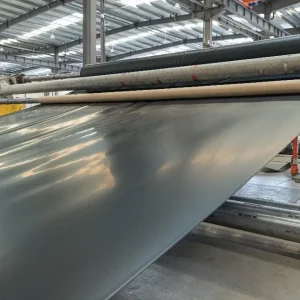
Wholesale HDPE Liner Geomembrane
Procure Specification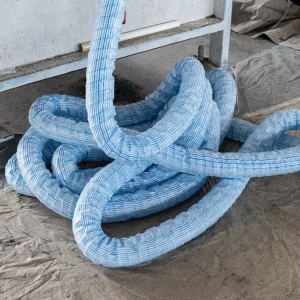
Flexible Soft Permeable Pipe
Procure Specification
HDPE Gravel Grid Cellular Confinement
Procure Specification
Dual-Color Anti-Aging Earthwork Film
Procure Specification
Steep Slope Coarse Textured Liner
Procure Specification
Sub-Surface Convex Drainage Plate
Procure Specification
Continuous Filament Protective Geotextile
Procure Specification
Plastic Blind Filter Underground Ditch Drain
Procure SpecificationProcurement Directives
Frequently Asked Questions: Technical & Commercial FAQ
In-depth responses clarifying CNC machining dynamics, material grades, chemical resistance ratings, and international container transport specifications.
How does HDPE differ from UHMWPE in terms of CNC machinability and dimensional stability?
While both materials stem from the polyethylene family, High-Density Polyethylene (HDPE, molecular weight ~100,000 to 500,000 g/mol) exhibits a higher degree of crystalline order and elevated tensile modulus compared to Ultra-High-Molecular-Weight Polyethylene (UHMWPE, MW 3,000,000 to 6,000,000 g/mol). From a CNC routing perspective, HDPE cuts with cleaner chip segmentation and produces less fibrous edge burring. UHMWPE demonstrates superior abrasive wear resistance and impact dampening, but its continuous, rubbery chip requires extremely sharp, positive rake tooling and aggressive chip evacuation paths to prevent tool wrapping.
What specific measures prevent thermal distortion during large-format HDPE machining?
Due to HDPE's substantial thermal expansion coefficient (1.5–2.0 × 10⁻⁴ K⁻¹), thermal control is paramount. We implement three primary mitigation safeguards: (1) Temperature acclimatization of the polymer stock in a climate-controlled room (20°C ± 2°C) for at least 24 hours prior to cutting; (2) High chip-load machining programming (0.25 to 0.45 mm per revolution) which physically forces the heat into the expelled chips rather than the workpiece; and (3) Utilization of high-pressure vortex cold air guns to chill the localized cutting zone without introducing moisture or oil contamination.
Can Changhong customize geomembrane thickness, dual colors, and textured profiles to order?
Yes. As a factory-direct manufacturer, we control our own multi-layer co-extrusion blown film lines. We routinely produce geomembranes spanning from 0.5 mm up to 3.0 mm thicknesses, roll widths up to 8 meters (minimizing field welding seams), and dual-color variants (e.g., black/white for thermal reduction and leak detection, or black/green for landscape aesthetic integration). Surface finishes include smooth, single-sided textured, and double-sided nitrogen-blown textured surfaces engineered for slope stability.
How does the environmental stress crack resistance (ESCR) of your HDPE compare to ASTM standards?
Every production batch conforms to the Geosynthetic Research Institute GRI-GM13 standard. While the standard requires Single Point Notched Constant Tensile Load (SP-NCTL) testing to exceed 500 hours under 30% yield stress in a 10% Igepal solution at 50°C (ASTM D5397), our high-grade bimodal virgin resin formulations regularly surpass 1,000 hours without failure, guaranteeing long-term containment integrity in aggressive landfill leachate or chemical tailings environments.
What are your typical manufacturing lead times, export packing standards, and shipping documentation?
Standard production runs for full container loads (20GP / 40HQ) average 7 to 14 days upon spec confirmation. Geosynthetic rolls are tightly wound on high-strength paper cores, encased in heavy-duty double-layer UV-stabilized woven geotextile packaging, and fitted with high-tensile lifting straps for safe container destuffing. We supply complete commercial documentation, including Mill Test Certificates (MTC), Bill of Lading, Certificate of Origin (Form E, Form A, etc.), Packing Lists, and third-party inspection dossiers (SGS/TUV).
How do you ensure proper bonding, welding, and joint sealing for your HDPE containment products?
HDPE is non-polar and inherently resistant to chemical solvents, which means standard adhesives cannot form structural bonds. Reliable joining requires thermal fusion welding. For geomembrane field installation, we advocate double-track hot wedge welding (creating an integrated air channel for non-destructive pressure testing) alongside handheld hot air extrusion welding guns utilizing matched HDPE welding rod for penetrations, sumps, and detail repairs.