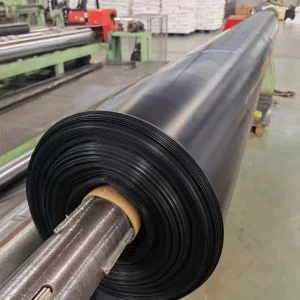
Featured Wholesale Polyethylene & Geosynthetic Products
Engineered for containment integrity, hydraulic performance, and extreme environment longevity. Directly sourced from our Shandong production base.
Understanding Polyethylene Polymers: LDPE, LLDPE, HDPE & EVA Selection Criteria
In major civil infrastructure, mining, and hydraulic projects, selecting the appropriate polymer matrix determines structural lifespan, tensile compliance, and environmental stress crack resistance (ESCR).
Low-Density Polyethylene (LDPE)
LDPE exhibits a highly branched polymer chain structure, granting exceptional flexibility, high elongation at break (>700%), and outstanding conformity to irregular subgrades without puncture propagation. Ideal for irrigation canals, agricultural storage ponds, and tunnel waterproofing membranes where differential settlement occurs.
Density: 0.910–0.925 g/cm³Linear Low-Density Polyethylene (LLDPE)
Formed by copolymerization of ethylene with short-chain alpha-olefins (butene, hexene, or octene), LLDPE balances the flexibility of LDPE with superior tensile stress, impact resistance, and multiaxial elongation. Essential for municipal landfill caps and tailings pond slope containment requiring high friction angles.
Density: 0.915–0.930 g/cm³High-Density Polyethylene (HDPE)
Characterized by a low-branching linear molecular structure, HDPE provides maximum chemical resistance, high yield strength, low permeability, and thermal stability up to 85°C. The international benchmark standard (GRI-GM13) for industrial hazardous waste impoundments and mining heap leach pads.
Density: 0.941–0.965 g/cm³| Physical Property Parameter | Testing Method Standard | LDPE Membrane Grade | LLDPE Membrane Grade | HDPE Heavy-Duty Liner |
|---|---|---|---|---|
| Density Range (g/cm³) | ASTM D1505 / ISO 1183 | 0.910 – 0.925 | 0.918 – 0.930 | 0.940 – 0.960 |
| Tensile Strength at Break (MPa) | ASTM D6693 Type IV | ≥ 20 MPa | ≥ 25 MPa | ≥ 40 MPa |
| Elongation at Break (%) | ASTM D6693 Type IV | ≥ 750% | ≥ 800% | ≥ 700% |
| Puncture Resistance (N) | ASTM D4833 / ISO 12236 | 240 N | 350 N | 520 N |
| Carbon Black Content (%) | ASTM D1603 / D4218 | 2.0 – 3.0 % | 2.0 – 3.0 % | 2.0 – 3.0 % |
| Oxidative Induction Time (OIT) | ASTM D3895 (100 kPa O2) | ≥ 100 min | ≥ 100 min | ≥ 100 min |
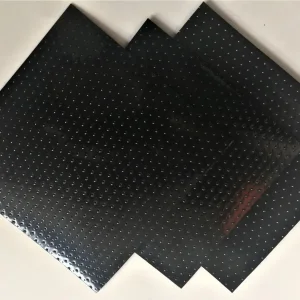
| Interface Friction Coefficient | ASTM D5321 (Direct Shear) | Smooth: 11°–14° | Textured: 26°–32° | Textured: 28°–34° |
Advanced 3-Layer Co-Extrusion & Additive Stabilization Tech
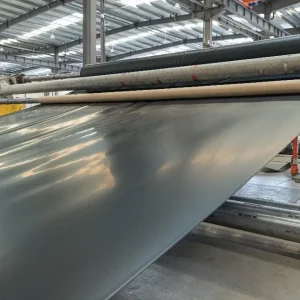
Our factory utilizes state-of-the-art 3-layer co-extrusion blown film lines. By compounding prime virgin polymer resins with 2.5% fine-particle carbon black (particle size <25 nm), HALS (Hindered Amine Light Stabilizers), and primary/secondary antioxidants, our PE earthwork membranes achieve projected service lifetimes exceeding 50 years under exposed UV conditions and over 100 years when buried in soil environments.
The China Factory Supply Chain Advantage for Global Projects
Located in the High-Tech Development Zone of Taian, Shandong Province, our self-operated manufacturing hub provides enterprise buyers with direct price transparency, uncompromised quality control, and rapid container dispatch.
Integrated Polymer Sourcing & Custom Formulations
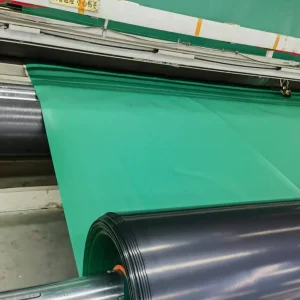
We maintain long-term strategic raw material agreements with global petrochemical producers (Sinopec, Sabic, ExxonMobil). This enables us to formulate customized polymer blends—including flexible EVA-modified polyethylene, high-visibility dual-color sheets (Black/Green, Black/Blue), and flame-retardant grade geomembranes tailored to client tender specs.
Continuous Extrusion & Roll Size Optimization
Equipped with 15+ automated production lines, our plant produces continuous geomembrane widths from 2.0 meters up to 8.0 meters, drastically reducing site seam welding costs. Customized roll lengths (up to 300m) minimize transverse joints, mitigating potential leakage vulnerabilities in major civil installations.
Localized Deployment Matrix for Multi-Sector Projects
From heavy industrial mining operations to eco-centric Sponge City urban projects, our PE earthwork films, geocells, and drainage boards deliver optimized containment systems.
1. Mining & Heap Leach Pad Liner Systems
Engineering Challenge: Leaching pregnant copper/gold solutions under severe pile weight and sharp rock impact without liner rupture or slope failure.
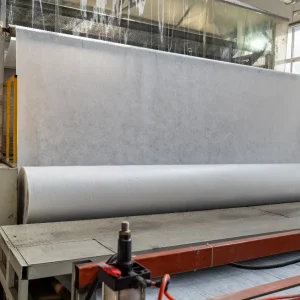
System Architecture: 1.5mm–2.0mm Coarse Textured HDPE/LDPE membrane combined with 500g/m² non-woven filament geotextile protective underlayment to maximize interface friction up to 34°.
2. Municipal Landfills & Hazardous Waste
Engineering Challenge: Preventing toxic leachate migration into deep groundwater aquifers under dynamic differential settlement.
System Architecture: Double composite liner stack: Compacted clay subgrade + 2.0mm Smooth HDPE liner + Geocomposite drainage net + Non-woven needle-punched geotextile buffer.
3. Sponge City & Siphonic Roof Drainage
Engineering Challenge: Managing high-volume rainfall in urban podium decks and green roofs without structural load overhead or water leakage.
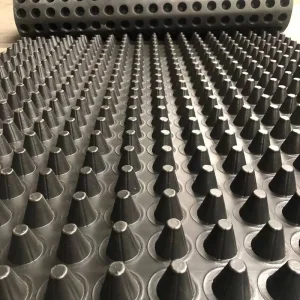
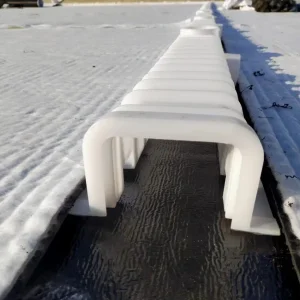
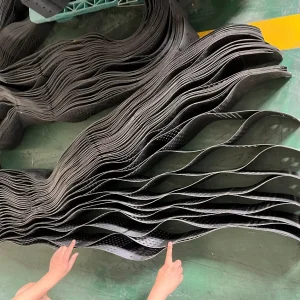
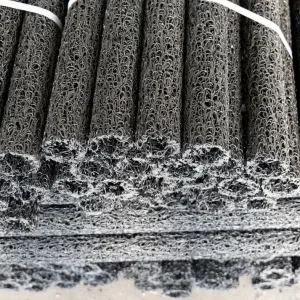
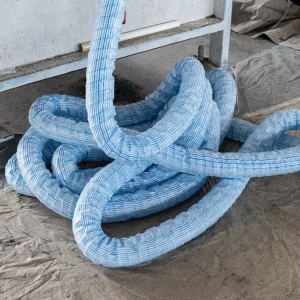
System Architecture: High-impact concave-convex plastic drainage cells linked with siphonic collection conduits and permeable plastic blind drain pipes for rapid water collection.
4. Hydraulic Engineering & Reservoirs
Engineering Challenge: Eliminating seepage loss across thousands of continuous dam face areas and agricultural transport canals.
System Architecture: Dual-color (Black/Green or Black/Blue) flexible LDPE/EVA composite earthwork film. The bright colored top layer provides fast visual inspection for installation damage.
5. Aquaculture & Intensive Fish Ponds
Engineering Challenge: Maintaining stable water salinity/quality, preventing soil erosion, and enabling fast chemical disinfections between harvest cycles.
System Architecture: Food-grade 0.5mm–1.0mm smooth LDPE/HDPE pond liner, chemically inert, non-toxic to aquatic flora and fauna, UV resistant for outdoor exposure.
6. Railway Subgrade & Slope Stabilization
Engineering Challenge: Load dissipation over soft marine soil deposits and preventing gully erosion on steep roadside cuts.
System Architecture: Textured HDPE Gravel Grid Geocell cellular confinement matrix filled with aggregate stone, supported by high-tenacity filament woven geotextile.
Global Procurement Criteria & Quality Assurance Framework
We assist international EPC contractors, municipal authorities, and trading partners in passing strict engineering audit requirements by adhering strictly to global technical standards.
Standard Compliance & Test Verification
Every batch of LDPE, LLDPE, and HDPE geomembrane manufactured at our facility undergoes rigorous factory acceptance testing (FAT). We test every 5,000 square meters for roll thickness uniformity, density, tear strength, ESCR (Environmental Stress Crack Resistance under ASTM D1693), and OIT (Oxidative Induction Time under ASTM D3895).
- GRI-GM13 Standard: High-Density Polyethylene Liners
- GRI-GM17 Standard: Linear Low-Density Polyethylene Liners
- ISO 9001 / ISO 14001: International Quality & Environmental Systems
- CE Certification: Compliant for European Infrastructure Supply
Field Installation & Welding Technical Support
Securing long-term anti-seepage performance depends heavily on localized site deployment standards. Our engineering division provides detailed thermal wedge welding parameters, dual-track seam air pressure testing guidelines, and extrusion welding repair protocols for field personnel worldwide.
Field Welding Tip: Dual-track hot wedge welding should maintain a overlap width of 100mm–120mm. Air pressure test channel must sustain 1.5–2.0 bar pressure for 5 minutes without dropping over 10%.
Emerging Trends in Polyethylene Geomembrane Engineering
As global environmental regulations tighten, polymer technology is evolving toward smart leak detection, circular economy integration, and ultra-high friction surfaces.
1. Conductive Geomembranes for ELD
Integration of a micro-thin co-extruded carbon conductive layer on the bottom surface allows post-installation Electronic Leak Location (ELL) testing per ASTM D7007. Micro-punctures as small as 1mm can be localized instantly across vast landfill footprints.
2. High-Friction Nitrogen-Sprayed Texturing
Moving away from traditional chemical embossing, advanced nitrogen gas injection texturing creates random structural peaks. This delivers friction angles above 32° when matched against non-woven geotextiles, critical for steep mining tailings slopes.
3. Sustainable Eco-Conscious Polymer Blends
Incorporating optimized post-industrial clean polyethylene streams into non-critical subgrade separation layers reduces carbon footprints while meeting strict circular economy mandates required by European and North American municipal buyers.
Frequently Asked Questions by Global Procurement Engineers
Clear, engineering-backed answers to essential queries regarding LDPE/HDPE selection, logistics, customization, and quality verification.
What is the primary difference between LDPE, LLDPE, and HDPE geomembranes in construction?
Can your factory manufacture customized roll widths, roll lengths, and double-color options?
How does your facility ensure anti-aging and long-term UV resistance for exposed applications?
Which geomembrane surface texture (Smooth vs. Coarse Textured) should be specified for mining slopes?
What quality documentation and mill test certificates accompany international container orders?
What is the recommended subgrade preparation before laying PE geomembranes?
How are LDPE/HDPE geomembrane rolls packaged for safe overseas ocean freight transport?
What field seam welding methods are utilized for joining PE liner rolls?
How do Geocells work together with Geotextiles and PE Earthwork Films?
What lead time is required for wholesale container production?
Explore Our Full Range of Geosynthetic Solutions
Combine geomembranes, geocells, geotextiles, and drainage plates into unified factory-direct container shipments to minimize logistics freight costs.